Class A, B and C motorhomes explained
What Class A, B and C motorhomes are, what Europe, the UK, Australia and NZ call them, and the licence, length and weight limits to check first.

João & Maria · Updated · 13 min read
- 3 motorhome classes
- EU/UK cat. B: 3,500 kg
- NZ class 1: 6,000 kg
- Sun Road max 21 ft · 6.4 m
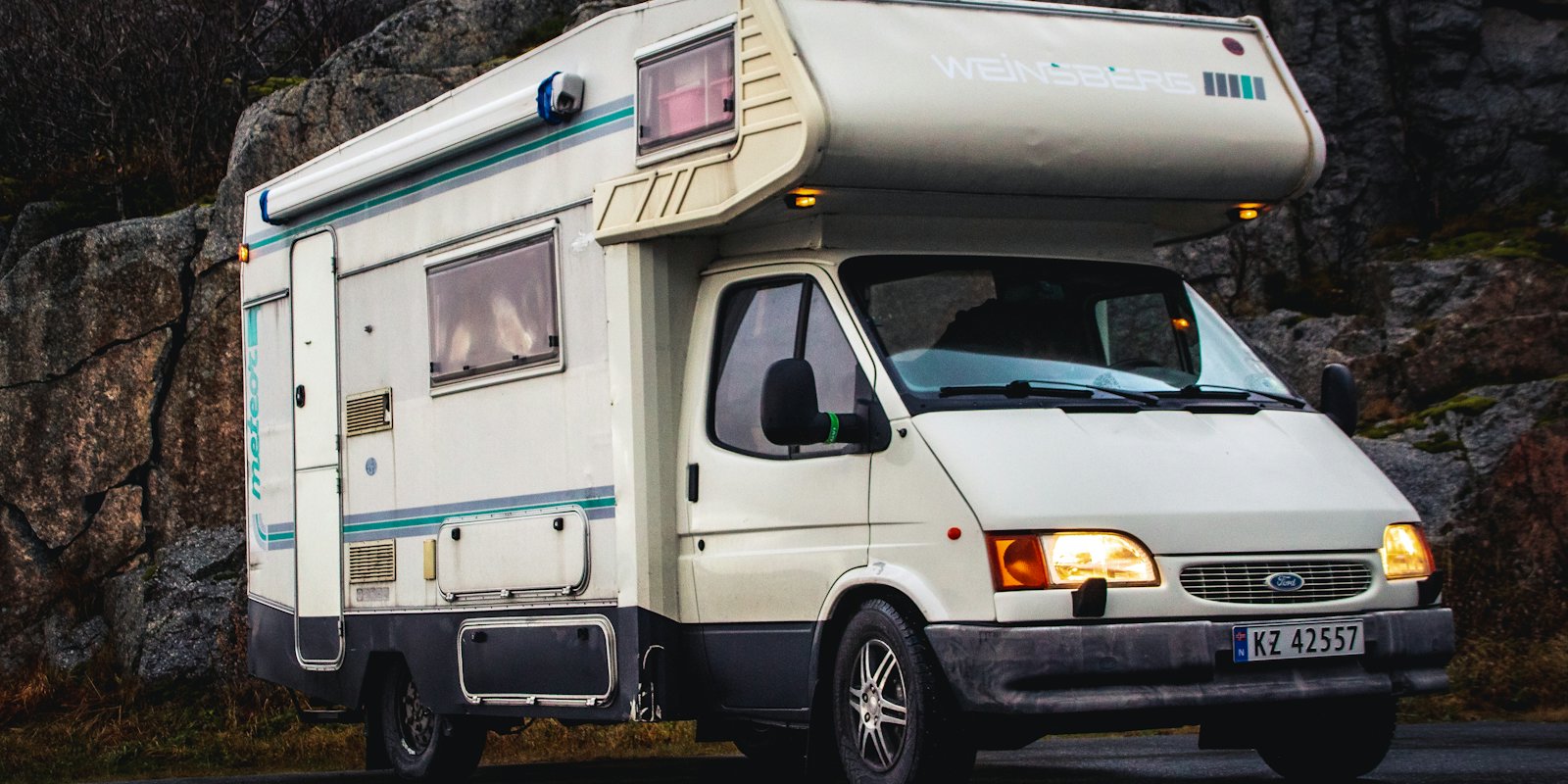
Class A, Class B and Class C are North American labels. They describe how a motorhome is built, and that tells you a lot about how it drives, where it fits and what licence you might need. Cross the Atlantic or the Pacific and the same vehicles go by different names: coachbuilt, A-class, low-profile, campervan, pop-top, hi-top.
This guide sorts out the vocabulary, then covers what matters on the road: licence and weight limits, length limits on park roads and campgrounds, and ferry fares that rise with length. We flag where you need to check the specific vehicle in front of you.
The short version
In North America, motorhome classes are defined mainly by the chassis they are built on, according to RV.com’s overview of RV classes (secondary). Lengths and sleeping numbers below are typical ranges from industry guides, so treat them as rough. The figure that counts is the one on the vehicle’s spec sheet or plate.
| Class | What it is | Typical length | Sleeps | Licence notes | Best for |
|---|---|---|---|---|---|
| Class A | Box-shaped coach built on a bus or heavy truck chassis | About 25–45 ft (7.6–13.7 m) | Up to 10 | California: over 40 ft needs a noncommercial Class B with endorsement. Other states set their own rules | Long stays, full-time living, big campgrounds |
| Class B | Campervan built inside a factory van body | About 19–27 ft (5.8–8.2 m) | 2–4 | Usually car-licence territory, but check the plated weight | Couples, narrow roads, city edges, national park roads |
| Class C | Van or truck cab with a living box behind and a bed over the cab | Roughly mid-20s to mid-30s ft (about 7.3–11 m), some shorter | 2–6 | Check the plated weight against your licence, especially in Europe, the UK, Australia and NZ | Families, first-timers who want space |
Length ranges come from CampAddict (secondary) and sleeping figures from RV.com (secondary). Manufacturers vary, so compare individual models.
Class A
A Class A is the big one. It is usually built on a bus or large commercial truck frame, and RV.com describes these as “the heaviest and largest recreational vehicles” (secondary). From the outside it looks like a coach: flat front, huge windscreen, the driver’s seat inside the living space rather than in a separate cab.
What you get
Space is the point. Class A coaches can sleep up to ten people, sometimes more, and are typically the most expensive class to buy, according to RV.com (secondary). Most have a separate rear bedroom, a full bathroom and a lounge.
What it costs you on the road
A long Class A is shut out of some scenic roads and older campgrounds, which we cover below. Towing a small car for day trips adds to total length and to the licence question. In California, for example, a Class C car licence covers a house car (the state’s term for a motorhome) of 40 feet or less. Above that you need a noncommercial Class B licence with a house car endorsement, under California Vehicle Code section 12804.10 (secondary).
Who it suits
People who stay put for days in big, well-served campgrounds, or who want a home on wheels more than a vehicle for twisty mountain roads.
Class B (campervans and van conversions)
A Class B is a campervan. Builders take a factory van, such as a Mercedes Sprinter, Ford Transit or Ram ProMaster, and fit the living space inside the original metal body, as RV.com explains (secondary). The van’s own cab stays as it is.
What you get
These are the smallest motorhomes and usually sleep two to four (RV.com, secondary). Expect a compact kitchen, a bed that may convert from seating, and in longer vans a small wet bath.
B+ and the grey zone
You’ll see “B+” in North American listings. It usually means a van-based build with a wider, purpose-built body. CampAddict (secondary) says B+ models are usually not over 25 ft and that, unlike a Class C, the space over the cab is not designed for sleeping. These labels are marketing terms, so read the floor plan rather than the badge.
Who it suits
Couples, nervous drivers, and anyone planning narrow roads or parks with tight limits. If you’re planning a New Zealand trip, our guide to campervan hire in New Zealand covers how to choose a van there.
Class C
A Class C sits between the other two. It starts with a cutaway van or truck chassis, keeping the driver’s cab, and the builder adds a wider living box behind. The giveaway is the bulge over the cab, which usually holds a bed. RV.com (secondary) notes the common North American base is a heavy-duty Ford chassis, and that Class C models usually sleep two to six.
Super C
A Super C is a Class C on a much heavier truck chassis, often diesel. RV.com (secondary) says the longer wheelbase adds stability and space but makes them harder to manoeuvre in tight spots. A heavier chassis also matters for licences outside North America, so check the plated weight.
Who it suits
Families. The over-cab bed keeps the main layout free, and it drives more like a large van than a bus.
Outside North America: how Europe, the UK, Australia and New Zealand name them
The letters A, B and C don’t travel well. In the UK, Ireland, Australia and New Zealand you’ll mostly hear the terms below, and continental European brochures often add “integrated” (for A-class) and “semi-integrated” (for low-profile). The descriptions here draw on the Caravan and Motorhome Club’s motorhome buying guide (secondary) and Campercontact’s guide to motorhome types (secondary).
Coachbuilt
The umbrella term. A builder takes a manufacturer’s cab and chassis and puts a separate living body on the back. Two common shapes:
- Over-cab (sometimes called Luton or alcove). The living space extends over the driver’s cab. The Caravan and Motorhome Club says these sleep from two to six, generally with a double bed over the cab. This is the closest match to a North American Class C.
- Low-profile (semi-integrated). Same idea without the bulge. Storage cupboards sit over the cab in place of a bed. The Club says handling and fuel use are slightly better and that this layout tends to suit couples. Campercontact calls it the most popular type and gives a typical length of about 5.5 to 7.5 m (18 to 25 ft).
A-class (integrated)
The cab and living area are built as one, with a large front window and no step between them. The Club describes A-class as the top of the range, with the most space and comfort of the coachbuilts, and a drop-down bed over the cab area. In shape, it’s a European Class A, though European A-class models are often much shorter than American ones.
Campervan
A van conversion, the same thing as a North American Class B. The Club splits campervans by roof type:
- Fixed roof. Low enough for many garages and car parks. No standing room, and usually two berths.
- Pop-top (elevating roof). The roof lifts when parked to give standing room. Some have canvas bunks up top suited to children.
- Hi-top (high-top). A permanently raised roof with about 2 m (6.5 ft) of standing room. Some fit a shower or toilet room.
Campercontact also uses “panel van” for a van conversion large enough for a full bathroom.
Quick translation
| North America | UK and Ireland | Australia and New Zealand | Continental Europe |
|---|---|---|---|
| Class A | A-class | A-class (less common) | Integrated |
| Class B | Campervan (fixed roof, pop-top, hi-top) | Campervan, pop-top, hi-top | Campervan, panel van |
| Class C | Coachbuilt over-cab | Motorhome, over-cab | Alcove |
| (no direct match) | Low-profile coachbuilt | Low-profile | Semi-integrated |
Licence and weight limits
This is the section to read twice. Licence rules follow weight in most countries and length in some US states. The weight that counts is usually the maximum the vehicle is allowed to weigh fully loaded, which is printed on a plate or sticker on the vehicle and in the handbook, as gov.uk’s guide to vehicle weights explains. It is not what the van weighs on the day.
United States
Licensing is set state by state, so check your own state DMV. California is a useful example of how it works. The California DMV’s licence class page lists “Housecar/motorhome (Noncommercial Class B)” for vehicles over 40 feet and not over 45 feet, with an endorsement. Under Vehicle Code 12804.10 (secondary copy of the statute), a regular Class C licence holder can drive a house car of 40 feet or less. Applicants for the house car endorsement must pass a specialised written test and a supervised driving test, and submit medical information when applying and every two years after.
UK and EU (category B and the 3,500 kg line)
The EU driving licence directive defines category B as vehicles with a maximum authorised mass not exceeding 3,500 kg, built to carry no more than eight passengers plus the driver (Directive 2006/126/EC). Category C1 covers vehicles over 3,500 kg and up to 7,500 kg.
In the UK, gov.uk’s licence categories page gives the same 3,500 kg limit for category B petrol and diesel vehicles, with a higher 4,250 kg limit for zero-emission electric and hydrogen vehicles. Drivers who passed their test before 1 January 1997 usually have extra entitlement; gov.uk says they can generally drive a vehicle and trailer combination up to 8,250 kg and should check their licence record.
In practice, some larger over-cabs and A-classes are plated above 3,500 kg. Look at the plate before you book or buy. The Caravan and Motorhome Club (secondary) also notes that UK drivers aged 70 and over who renew without a medical report are limited to 3,500 kg.
New Zealand
A full class 1 (car) licence in New Zealand covers vehicles up to 6,000 kg gross combined weight, according to Wikipedia’s summary of NZ licence classes (secondary). That covers most rental campervans and many motorhomes. Learner and restricted licences have lower limits. The official source is the NZ Transport Agency (NZTA) website, which blocked our checks, so confirm the current rule and how long an overseas licence is valid there before you travel. Our New Zealand campervan guide covers the wider planning.
Australia
Licence classes are set by each state and territory. In New South Wales, a Class C car licence covers vehicles up to 4.5 tonnes gross vehicle mass (GVM) that seat up to 12 adults including the driver (Transport for NSW licence classes). Above 4.5 tonnes and up to 8 tonnes, a rigid vehicle needs a Light Rigid (LR) licence. Other states use the same class names, but check the state where you’ll pick up the vehicle.
| Place | Car licence covers | Next step up | Official source |
|---|---|---|---|
| UK and EU | Up to 3,500 kg | C1 (3,500–7,500 kg) | gov.uk, EU directive |
| California | Motorhome of 40 ft or less | Noncommercial Class B with endorsement over 40 ft | California DMV |
| New Zealand | Up to 6,000 kg (full class 1) | Class 2 | NZTA (check directly) |
| New South Wales | Up to 4.5 t GVM | Light Rigid (LR) up to 8 t | Transport for NSW |
Which size for which trip
Couples
A Class B, campervan or low-profile is usually enough for two. It’s cheaper to run, simpler to park and far more likely to fit under park road limits. We’d pick the smallest vehicle that still gives you a fixed bed you don’t have to rebuild every night.
Families
An over-cab Class C or coachbuilt gives the kids a separate bed and keeps the dinette free. Count seat belts as well as beds.
Narrow roads and old towns
Single-track roads in the Scottish Highlands, fjord roads in Norway and the alpine passes of Europe all reward a smaller vehicle. Our Scotland and Norway guides cover the road conditions in more detail. Campercontact (secondary) notes that larger over-cabs often won’t fit a standard parking bay, while campervans fit many parking garages.
National parks with length limits
This is where size bites hardest in North America.
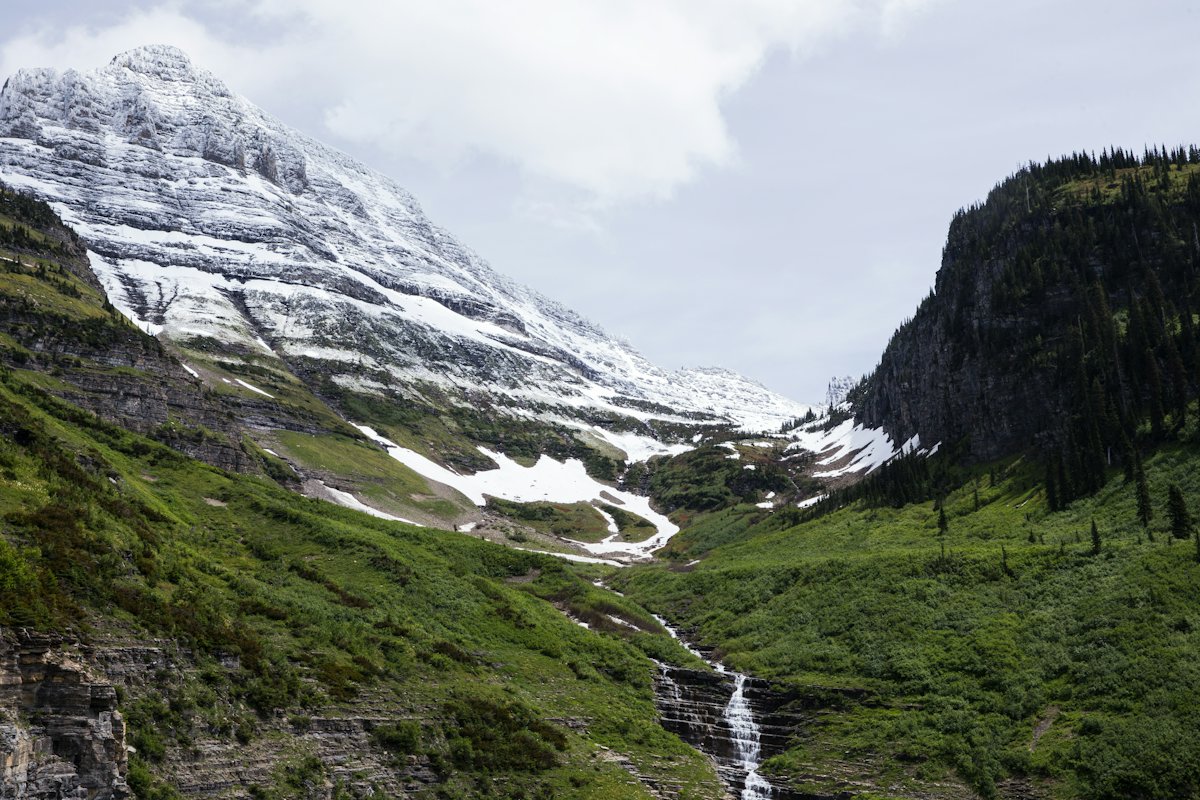
- Going-to-the-Sun Road, Glacier National Park. Vehicles and combinations longer than 21 ft (6.4 m) including bumpers, or wider than 8 ft (2.4 m) including mirrors, are prohibited between Avalanche Creek and Rising Sun, according to the National Park Service. Vehicles over 10 ft (3 m) tall may have trouble with rock overhangs west of Logan Pass. Most Class A and Class C motorhomes are over the length limit. Many Class B vans fit.
- Zion-Mount Carmel Highway, Zion National Park. The NPS tunnel page sets limits between Canyon Junction and the East Entrance of 35 ft 9 in (10.9 m) long, 7 ft 10 in (2.39 m) wide and 11 ft 4 in (3.45 m) high for single vehicles, measured including mirrors and attachments like AC units and bike racks. Combinations can be up to 50 ft (15.24 m). Vehicles over the limits are turned around at the entrances, with limited exceptions.
- Banff National Park campgrounds. Parks Canada’s Banff camping page lists very different limits by campground. Castle Mountain takes units up to 7.3 m (24 ft). Mosquito Creek and Waterfowl Lakes sit at 10 m (35 ft) and 9 m (31 ft). Tunnel Mountain Trailer Court has full-service sites for units up to 15 m (50 ft). Some figures differ within the same page, so confirm with Parks Canada before booking. Our Canadian Rockies campervan guide has more on routes and campgrounds.
Limits change, so check the specific campground or road page before you book.
Running costs and practicalities
Fuel
Bigger and heavier means thirstier. The Caravan and Motorhome Club (secondary) notes that low-profile coachbuilts use slightly less fuel than over-cab models. There’s no official fuel figure that holds across classes, so compare manufacturer numbers for the models you’re considering.
Parking and height
Car parks and some city streets have height barriers. The Club points out that some continental low-profiles have an elevating roof section to help with height barriers, and that fixed-roof campervans fit in many garages. Measure your vehicle’s height with anything on the roof, and stick the figure on the dashboard.
Ferries charge by length
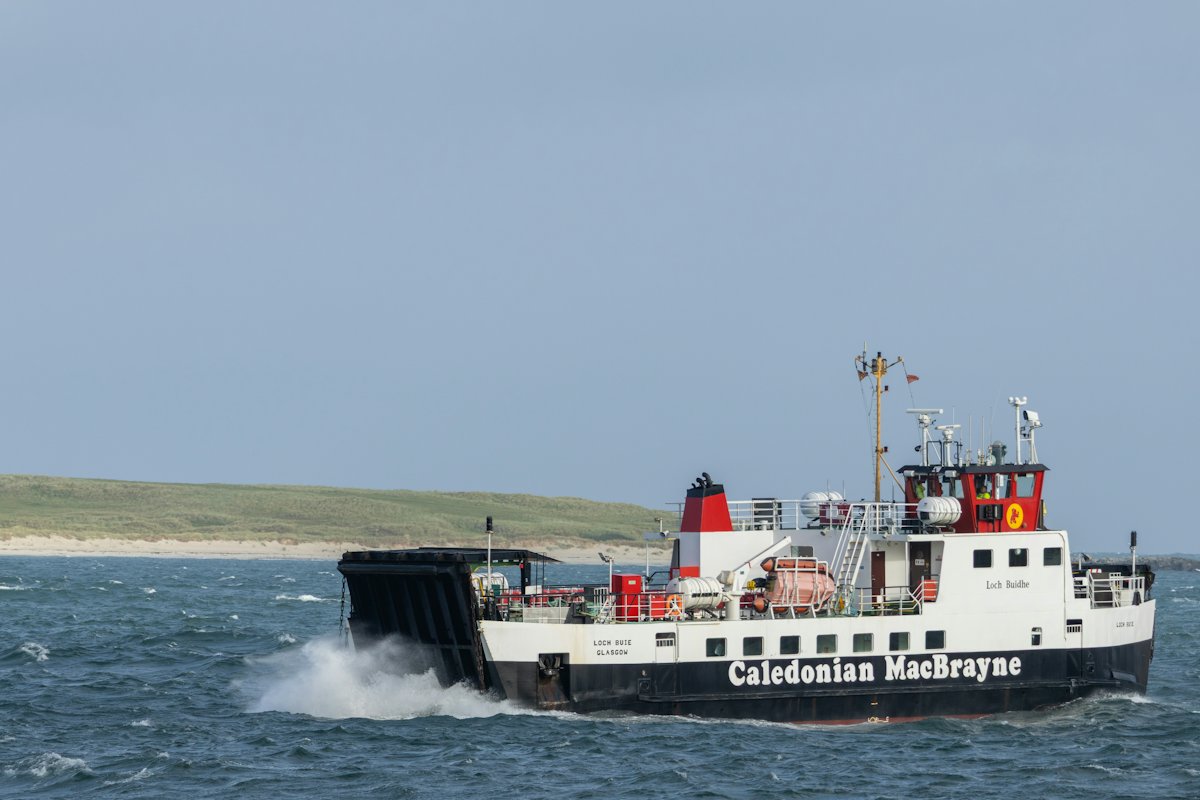
Many ferries price motorhomes in length bands, so a metre can cost real money. On Scotland’s CalMac network, the 2026 fare sheet for the Sconser to Raasay crossing lists a campervan or motorhome up to 6 m at £8.75 single, over 6 m to 8 m at £21.90, over 8 m to 10 m at £26.25, and over 10 m to 12 m at £30.65 (seen October 2026). A car on the same crossing costs £8.75, the same as the smallest motorhome band. Fares differ by route and change over time.
In Norway, ferry operator Norled says the length of your motorhome affects what you pay, and that bike racks and other items at the back count toward total length. That can push you into a higher price band. If you plan a lot of ferries, a van under 6 m can save money on every crossing.
Frequently asked questions
What is the difference between Class A, B and C motorhomes?
The difference is mostly the chassis. A Class A is built on a bus or heavy truck chassis and looks like a coach. A Class B is a campervan built inside a factory van body. A Class C uses a van or truck cab with a wider living box behind and usually a bed over the cab.
Can I drive a motorhome on a normal car licence?
Often, yes, but it depends on the vehicle’s plated weight or length and on where you are. In the UK and EU a category B licence covers vehicles up to 3,500 kg maximum authorised mass. In New South Wales a car licence covers up to 4.5 tonnes GVM, and in California a regular licence covers a motorhome of 40 feet or less. Check the vehicle’s plate and the official licence page for the place you’ll drive.
Which motorhome class is easiest to drive?
A Class B campervan is generally the easiest, because it drives like a large van and fits normal parking more often. It’s also the class most likely to fit tight limits like the 21 ft (6.4 m) rule on Glacier’s Going-to-the-Sun Road.
What do Europeans call a Class C motorhome?
In the UK it’s usually an over-cab coachbuilt, and in continental Europe it’s often called an alcove model. A European A-class, or integrated motorhome, is the closest match to a Class A, though usually shorter.
Does motorhome length affect ferry prices?
On many routes, yes. Scotland’s CalMac lists motorhome fares in length bands, with the up to 6 m band priced the same as a car on the Sconser to Raasay crossing and higher prices for each band above. Norway’s Norled says length sets the fare and that bike racks count toward it. Check the operator’s current fare table for your route.