The Canadian Rockies by campervan: the complete guide
Plan a Canadian Rockies campervan trip: Banff, Jasper, Yoho, Kootenay, the Icefields Parkway, campground booking, park passes, overnight rules and winter tyres.
- Best Jun–Sep
- 10–14 days
- Drive on the right
- Icefields Parkway 232 km · 144 mi

João & Maria · Updated · 13 min read
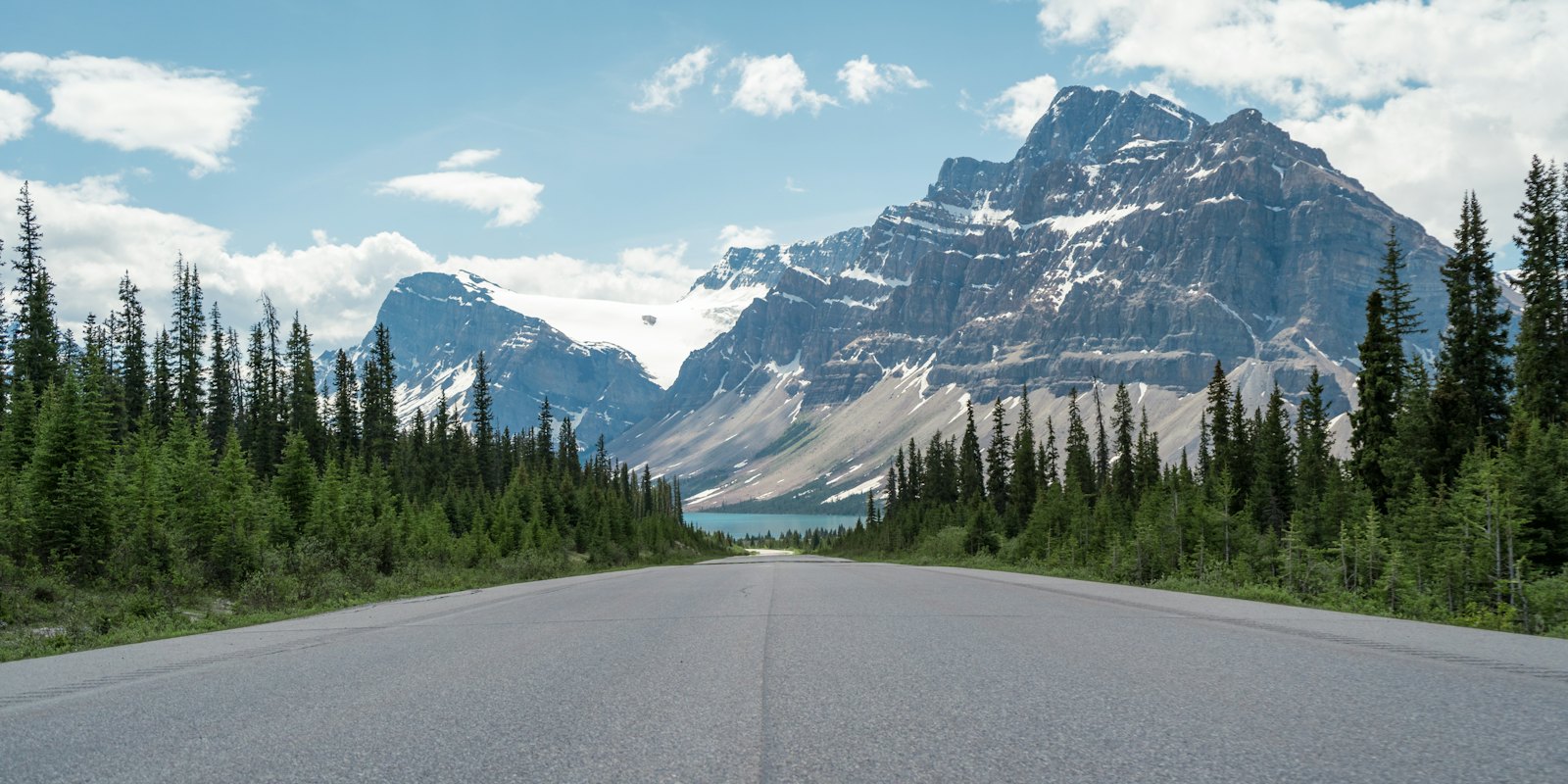
Four national parks sit side by side along the Continental Divide: Banff and Jasper in Alberta, Yoho and Kootenay in British Columbia. A small network of paved highways links them, and Parks Canada runs dozens of campgrounds along those roads, many with dump stations, showers and electrical hookups. That makes the Canadian Rockies one of the easier mountain regions in North America to explore in a campervan, as long as you plan around a short summer season and a firm rule that you sleep only in designated campgrounds.
This guide suits travellers who like structure. The best campgrounds are booked months ahead, the most famous lakes are reached by shuttle, and the roads are remote, with long stretches of no fuel and no cell signal. If you’re happy to book early and follow park rules, a van lets you wake up close to the trailheads and move between all four parks at your own pace.
At a glance
| Best time to go | June to September, when most campgrounds and parkway services are open |
| Trip length | 10–14 days to cover all four parks without rushing |
| Driving side | Right |
| Main route (distance) | Icefields Parkway (Hwy 93N), Lake Louise to Jasper: 232 km (144 mi) |
| Overnight rules | Designated campgrounds only; no sleeping in vehicles at pullouts, parking lots or trailheads |
| Currency | Canadian dollar (CAD) |
| Emergency number | 911 (cell coverage is unreliable in the parks) |
| Key official site | parks.canada.ca and reservation.pc.gc.ca |
Why go by campervan
The parks are built around frontcountry campgrounds. Banff alone lists more than a dozen, from serviced sites at Tunnel Mountain to primitive sites along the Icefields Parkway, and Jasper’s Whistlers campground has 781 sites, according to Parks Canada. With a van you can stay at Lake Louise one night and Jasper the next without unpacking, and you carry your food, water and warm layers with you on roads where services are thin.
A van also helps on the Icefields Parkway, which Parks Canada describes as a remote roadway with limited services and no cell coverage.
There are limits. Moraine Lake Road is closed to personal vehicles year-round, and RVs and oversized vehicles are not permitted at the Lake Louise Lakeshore lot, per Parks Canada’s Lake Louise access page. The Yoho Valley Road to Takakkaw Falls has tight switchbacks that Parks Canada says suit only cars and small RVs. In winter, most campgrounds close, the parkway has no services, and you need proper winter tyres.
When to go
Summer is short. Most Parks Canada campgrounds in Banff, Jasper, Yoho and Kootenay open between May and June and close between September and mid-October, and Parks Canada notes that mountain passes and hiking trails may not be clear of snow until the end of June. July and August are the warmest and busiest months. September is cooler and quieter, though it overlaps with the elk rut. The figures below are for the Town of Banff unless noted, from Parks Canada’s weather page.
| Months | Weather | Daylight | Roads & access | Crowds |
|---|---|---|---|---|
| Dec–Feb | Coldest period; January average lows around -15°C (5°F), highs around -5.3°C (22°F) | As little as 8 hours in December | Winter tyres required on BC routes and the Icefields Parkway; no parkway services; only a few campgrounds open | Ski season crowds in towns |
| Mar–May | Snow continues; Banff averages 27.0 cm (10.6 in) in March and 17.1 cm (6.7 in) in May | 12 hours in March to 15.5 hours in May | Bow Valley Parkway night closure from March 1; first campgrounds open in May; Lake Louise shuttle starts May 15 (2026) | Building from late May |
| Jun–Aug | July average high 22.1°C (72°F) in Banff, 20.4°C (69°F) in Lake Louise; nights can be a few degrees above freezing | Late June sunrise around 5:30 am, sunset around 10 pm | All campgrounds and seasonal roads open; Moraine Lake shuttle from June 1 (2026) | Peak; campgrounds and shuttles sell out |
| Sep–Nov | September average high 16.1°C (61°F), November 0.5°C (33°F); snow returns, 18.9 cm (7.4 in) in October | Shortening fast | Shuttles end mid-October; most campgrounds close; BC winter tyre rules from October 1 | Quieter after Labour Day |
Routes to know
Icefields Parkway (Hwy 93N): Lake Louise to Jasper
Distance: 232 km (144 mi). Suggested time: 2–3 days.
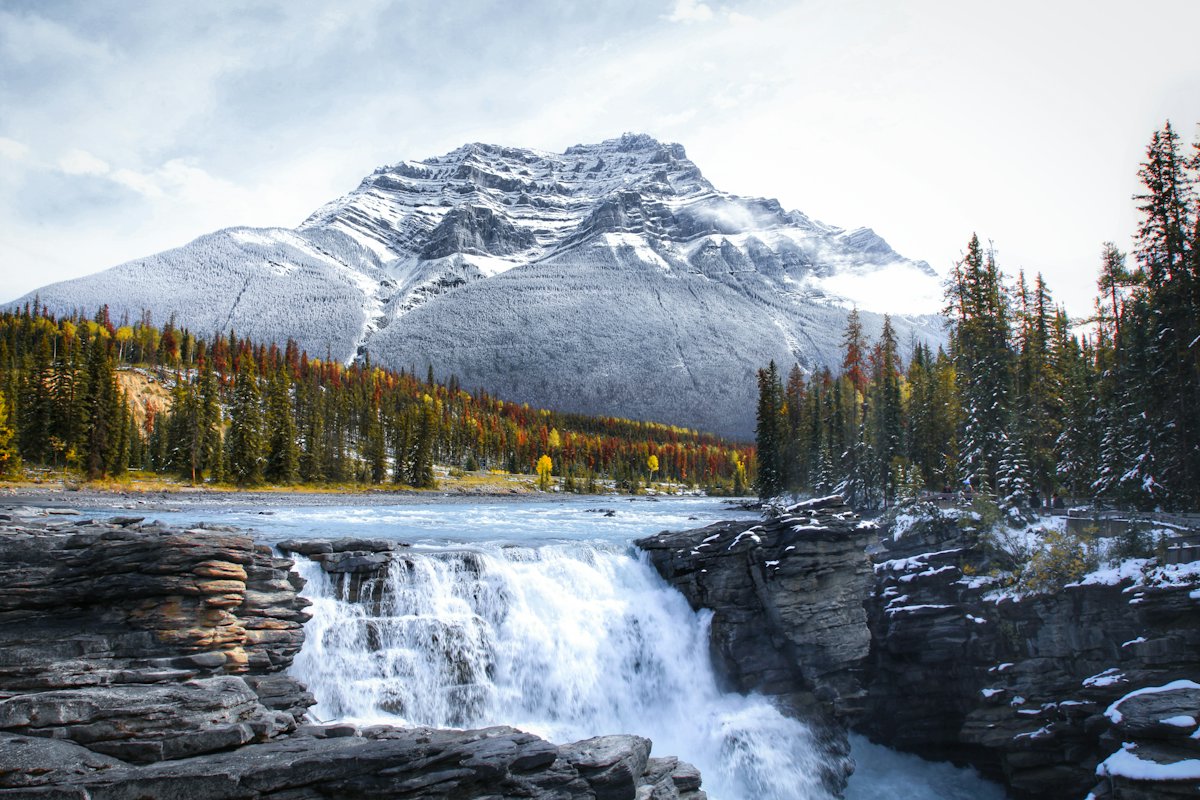
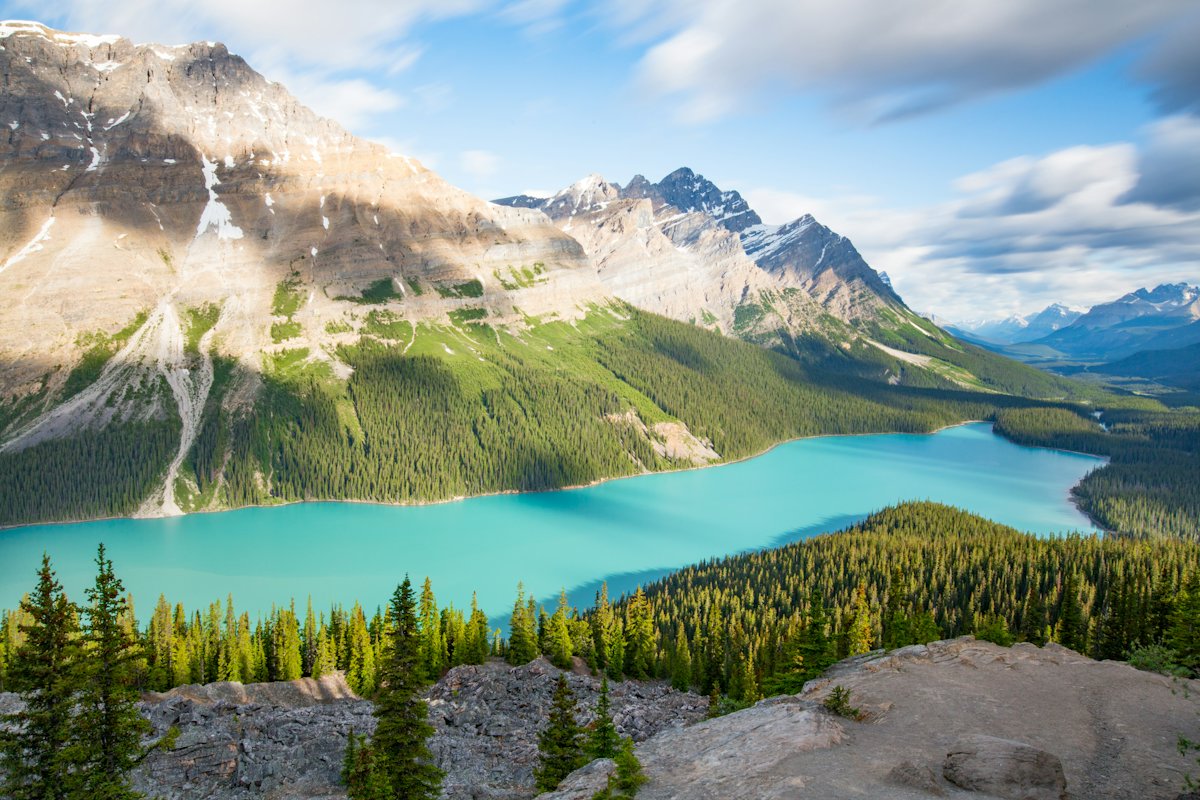
This is the spine of the trip. Parks Canada lists stops including Herbert Lake, Bow Lake, the Peyto Lake viewpoint, Bow Summit (2,070 m / 6,791 ft, the highest point on the road), Mistaya Canyon, the Columbia Icefield and Athabasca Glacier, and Sunwapta and Athabasca Falls. Fuel is available at Saskatchewan River Crossing, 80 km (50 mi) from Lake Louise, in summer only, so fill up in Lake Louise or Jasper. In winter, Parks Canada’s Jasper page says there are no services along the parkway, the road is not salted, and snow tyres or chains are required from November 1 to March 31.
Bow Valley Parkway: Banff to Lake Louise
Distance: 48 km (30 mi). Suggested time: half a day to a full day.
A slower, winding alternative to the Trans-Canada Highway, with Johnston Canyon and its campground partway along. Parks Canada closes the 17 km (11 mi) section between Johnston Canyon Campground and Fireside Picnic Area to all travel from about 8 pm to 8 am between March 1 and June 25. The same eastern section is restricted to cyclists during set windows, which in 2026 were April 30 to June 25 (8 am to 8 pm) and September 1 to October 6. Check the current dates before you plan on driving it.
Kootenay Parkway (Hwy 93S): Castle Junction to Radium Hot Springs
Distance: 94 km (58 mi) through the park. Suggested time: 1–2 days.
Highway 93 South leaves the Trans-Canada at Castle Junction and runs through the centre of Kootenay National Park to Radium Hot Springs, BC. According to Parks Canada, the maximum speed is 90 km/h (56 mph), there is no fuel in the park, and there is no cell or Wi-Fi service, with emergency phones at four marked locations. The town of Banff is 41 km (25 mi) from the park’s north-east entrance. Check DriveBC for roadwork and closures before you go.
Trans-Canada Highway through Yoho: Lake Louise to Golden
Distance: Lake Louise to Field 30 km (19 mi), Field to Golden 58 km (36 mi). Suggested time: 1–2 days.
Highway 1 crosses Kicking Horse Pass into BC and runs through Yoho, with Field as the only village inside the park. Parks Canada says Field is 85 km (53 mi) from Banff and 213 km (132 mi) from Calgary. Side trips go to Emerald Lake, whose parking fills quickly in July and August, and up the Yoho Valley Road to Takakkaw Falls, which opens late June to mid-October and suits only cars and small RVs. Lake O’Hara is reached by a reserved Parks Canada shuttle on an 11 km (7 mi) access road; day-use seats are allocated by random draw in March.
Where you can sleep
The rule: designated campgrounds only
Parks Canada treats sleeping in a vehicle as camping. The Banff park regulations state that camping, including sleeping in a vehicle, is not allowed in roadside pullouts, parking lots, trailheads and day-use areas. Jasper’s camping page says camping is only permitted at designated campsites, and Yoho and Kootenay require a valid park pass and camping permit. That means no overnight parking in town lots, at viewpoints or at trailheads. You also need a park entry pass on top of your campsite fee.
How Parks Canada campgrounds work
Reservable sites are booked through the Parks Canada Reservation Service or by phone at 1-877-737-3783. For the 2026 season, bookings opened on January 20 for Yoho and Kootenay, January 27 for Jasper and February 12 for Banff, according to Parks Canada and Banff & Lake Louise Tourism.
In Banff, check-in runs 2 pm to 8 pm and check-out is by 11 am. The maximum stay is 14 nights and occupancy is six people per site. Some campgrounds are first come, first served, including Mosquito Creek and Waterfowl Lakes in Banff and Wilcox, Honeymoon Lake, Jonas and Icefields Centre RV in Jasper.
Key campgrounds by park (2026 seasons)
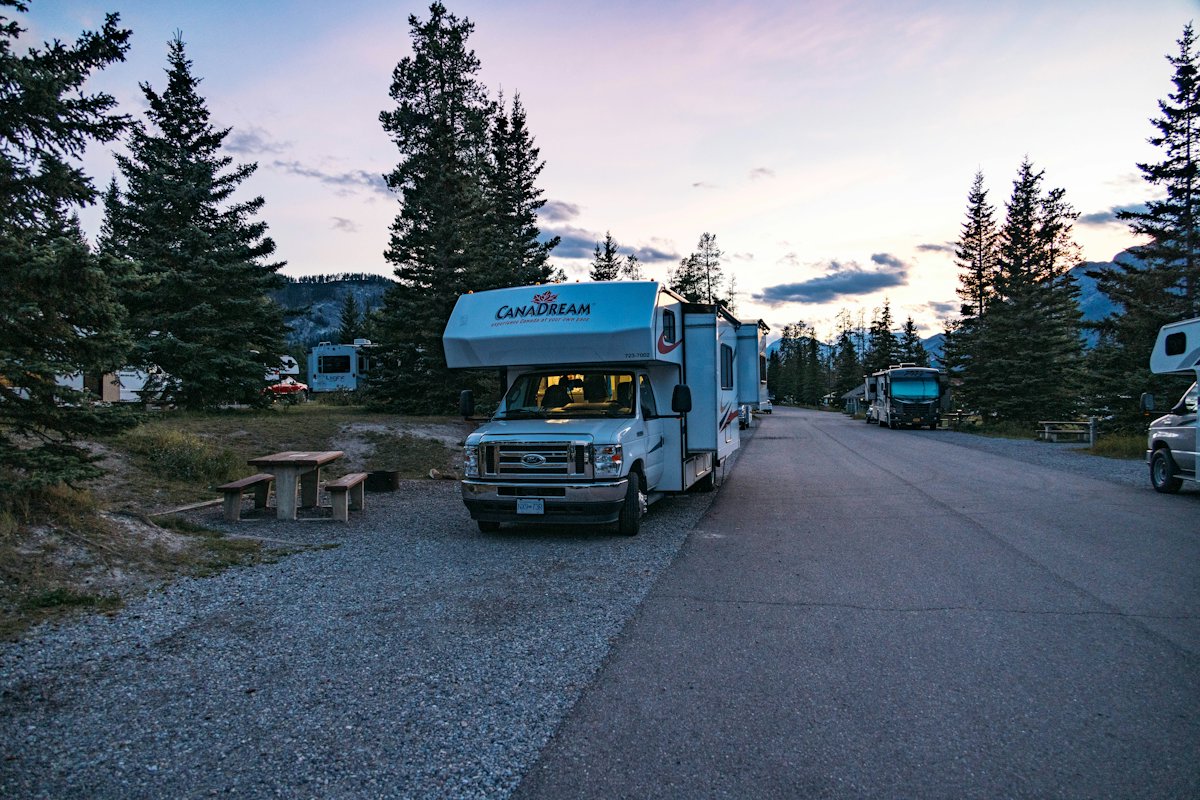
- Banff: Tunnel Mountain Village II and Lake Louise Hard-sided are open year-round. Lake Louise Hard-sided has 189 sites with electricity and admits only hard-sided units; soft-sided campers use the fenced Soft-sided campground. Two Jack Lakeside ran May 21 to October 5 and Johnston Canyon May 21 to September 14, per Banff camping.
- Jasper: Whistlers ran May 6 to October 12 and summer Wapiti May 13 to October 28, at reduced capacity after the 2024 wildfire. Wabasso is closed until further notice. From October 28, 2026, Wapiti runs as a winter campground with 40 electrical sites, first come, first served.
- Yoho: Kicking Horse (88 sites, May 14 to October 4) and Monarch (44 sites, RVs up to 27 ft) sit on the Yoho Valley Road near Field. Takakkaw Falls is walk-in and tents only. Details are on the Yoho frontcountry page.
- Kootenay: Redstreak near Radium (242 sites, May 6 to October 12) is the only one with showers and hookups. McLeod Meadows and Marble Canyon are unserviced, per the Kootenay frontcountry page.
Dump stations and services
Banff has sani-dumps at the Tunnel Mountain campgrounds, Lake Louise (hard- and soft-sided) and Waterfowl Lakes. Rampart Creek has no water fill, so campers there use Waterfowl Lakes. In Kootenay, Redstreak, Marble Canyon and McLeod Meadows all have sani-dumps. In Yoho, Kicking Horse and Monarch have seasonal dump stations. Jasper asks that grey water go in a campground toilet or a dump station.
Fires need a permit, and fire bans can come at short notice. Jasper allows generators only 8 to 10 am and 5 to 7 pm.
Outside the national parks
In Alberta, random camping on public land along the Eastern Slopes of the Rockies is allowed with a Public Lands Camping Pass for anyone 18 or older, with a 14-day maximum stay in one spot. The pass does not apply inside the Kananaskis Conservation Pass area, in fee campgrounds, or on private, municipal or federal land, which includes the national parks. If you park at provincial sites in Kananaskis Country, you need a Kananaskis Conservation Pass.
Driving rules and road conditions
Speed limits
Inside Banff, Parks Canada sets 90 km/h (56 mph) on major routes and 60 km/h (37 mph) or less on secondary roads, as posted. The Kootenay Parkway maximum is also 90 km/h. Outside the parks, follow the posted limits on Alberta and BC highways.
Licences for visitors
Alberta lets visitors drive the same class of vehicle on a valid home licence for up to one year, and strongly recommends getting an International Driving Permit from your home country, especially if your licence is not in English. You must carry both. In BC, ICBC says tourists can drive on their current licence for up to six months.
Winter tyres
British Columbia requires winter tyres or chains on most routes from October 1 to April 30, with some lower routes ending March 31. That covers Highway 1 through Yoho and Highway 93S through Kootenay. For RVs, the BC government sets M+S tyres as the minimum and recommends carrying chains. On the Alberta side, the Icefields Parkway requires snow tyres or chains from November 1 to March 31.
Wildlife on the road
Parks Canada asks drivers who see animals by the road to slow down, stay in the vehicle and keep moving. If you stop, pull over only where it is safe, use hazard lights and stay inside. Feeding, enticing or disturbing wildlife can bring fines up to $25,000.
Live road conditions
For Alberta, including the Icefields Parkway and the Trans-Canada through Banff, use 511 Alberta for closures, cameras and weather alerts. For Yoho and Kootenay, use DriveBC. Check before leaving each morning, since there is often no signal on the road.
What it costs
All prices are in Canadian dollars and change regularly; check the official fee pages before you travel.
| Item | Price | Source and date |
|---|---|---|
| Daily park admission, adult (18–64) | $12.25 | Banff fees, 2026 |
| Daily admission, family/group (up to 7 in one vehicle) | $24.50 | Banff fees, 2026 |
| Discovery Pass, adult / family-group (12 months) | $83.50 / $167.50 | Banff fees, 2026 |
| Youth 17 and under | Free | Parks Canada admission, Oct 2026 |
| Campsite, unserviced with showers | $34.00 per night | Banff, Jasper, Yoho fee pages, Oct 2026 |
| Campsite, electrical | $40.00 per night | Banff and Kootenay fee pages, Oct 2026 |
| Campsite, full hookup | $47.25 per night | Banff (Tunnel Mountain) and Kootenay (Redstreak), Oct 2026 |
| Primitive campsite | $19.50–$22.00 per night | Yoho and Banff fee pages, Oct 2026 |
| Fire permit | $12.00–$17.00 per day | Banff, Jasper, Yoho, Kootenay fee pages, Oct 2026 |
| Parks Canada shuttle, adult (Lake Louise / Moraine Lake) | $12.75 + $3.50 online booking fee | Banff fees, 2026 |
| Lake Louise Lakeshore parking | $42.00 per vehicle per day | Banff fees, 2026 |
| Lake O’Hara shuttle | $25.50 per person return | Yoho fees, Oct 2026 |
| Kananaskis Conservation Pass | $15 per day / $90 per year | alberta.ca, Oct 2026 |
| Alberta Public Lands Camping Pass | $20 (3 days) / $30 (year) + fees | alberta.ca, Oct 2026 |
For budgeting, the two fixed costs are park entry and campsites. If you spend more than about a week in the parks with two or more adults, the family/group Discovery Pass at $167.50 usually costs less than paying $24.50 a day. Fuel prices weren’t available from an official source we could cite, so check current pump prices in Calgary, Canmore, Banff or Golden, and note that the parkways have little or no fuel. Free admission under the Canada Strong Pass ran June 19 to September 7, 2026; regular fees apply as of September 8, 2026.
Tips
- Book campgrounds on launch day. Reservations for 2026 opened between January 20 and February 12 depending on the park. Popular summer dates go quickly.
- Plan Lake Louise and Moraine Lake around the shuttle. Moraine Lake Road is closed to personal vehicles, and a van can’t use the Lakeshore lot. Park free at the Lake Louise Park and Ride if you hold a shuttle reservation. Parks Canada releases 40% of seats on launch day and 60% two days before each departure at 8 am MDT.
- Buy your park pass before you arrive. You need a valid pass to stop in any of the four parks, including on the Icefields Parkway. A shuttle ticket does not include park entry.
- Fill up before the parkways. On the Icefields Parkway, Saskatchewan River Crossing is the only fuel stop and it is summer only. Kootenay has no fuel at all.
- Download maps offline. The Icefields Parkway has no cell coverage and Kootenay has none either.
- Know your wildlife distances. Parks Canada asks for at least 30 m (about 100 ft) from elk, deer, sheep and moose and 100 m (about 330 ft) from bears, wolves and cougars.
- Be careful around elk in spring and fall. Jasper lists calving season as May 15 to June 30 and the rut as September 1 to October 15, when elk can charge without warning.
- Keep a bare campsite. Food and scented items must stay in a vehicle or hard-sided trailer when not in use, and coolers are not bear-proof.
- Check the size of your van. Takakkaw Falls suits only cars and small RVs, Monarch takes units up to 27 ft, and some Kicking Horse loops suit 25 ft or less.
- Plan for no signal. Dial 911 in an emergency, but cell coverage is unreliable in the parks and absent on long stretches of the Icefields Parkway and Kootenay Parkway, which has emergency phones at marked locations.
Frequently asked questions
Can I sleep in my campervan anywhere in Banff or Jasper?
No. Parks Canada treats sleeping in a vehicle as camping, which is only allowed in designated campgrounds and sites. It is not allowed in roadside pullouts, parking lots, trailheads or day-use areas. You need both a park entry pass and a campsite booked or registered for the night.
Can I drive my campervan to Moraine Lake or Lake Louise?
Moraine Lake Road is closed to personal vehicles year-round, so you reach Moraine Lake by Parks Canada shuttle, a licensed commercial operator, or as a Moraine Lake Lodge guest. RVs and oversized vehicles are not permitted at the Lake Louise Lakeshore lot. Shuttle reservation holders can park free at the Lake Louise Park and Ride, and in 2026 the shuttles ran into mid-October.
Do I need a park pass to drive the Icefields Parkway?
Yes. Parks Canada says a valid national parks pass is required to travel the Icefields Parkway. You can pay a daily fee ($12.25 per adult or $24.50 per family/group in 2026) or buy an annual Discovery Pass, which covers more than 80 Parks Canada places for 12 months. Youth 17 and under enter free.
Do I need winter tyres in the Canadian Rockies?
It depends on the date and province. BC requires winter tyres or chains on most routes, including through Yoho and Kootenay, from October 1 to April 30, and M+S tyres are the minimum for RVs. On the Icefields Parkway in Alberta, snow tyres or chains are required from November 1 to March 31.
When do the campgrounds open in the Canadian Rockies?
Most Parks Canada campgrounds open between early May and mid-June and close between early September and mid-October. In Banff, Tunnel Mountain Village II and Lake Louise Hard-sided are open year-round, and in Jasper the winter Wapiti campground opens from late October with 40 first-come, first-served electrical sites.