Iceland by campervan: the complete guide
Plan an Iceland campervan trip: Ring Road, Westfjords and F-roads, where you can legally sleep, campsite costs, tolls, wind and winter driving.
- Best Jun–Aug
- 10–14 days
- Drive on the right
- Ring Road 1,322 km · 821 mi

João & Maria · Updated · 13 min read
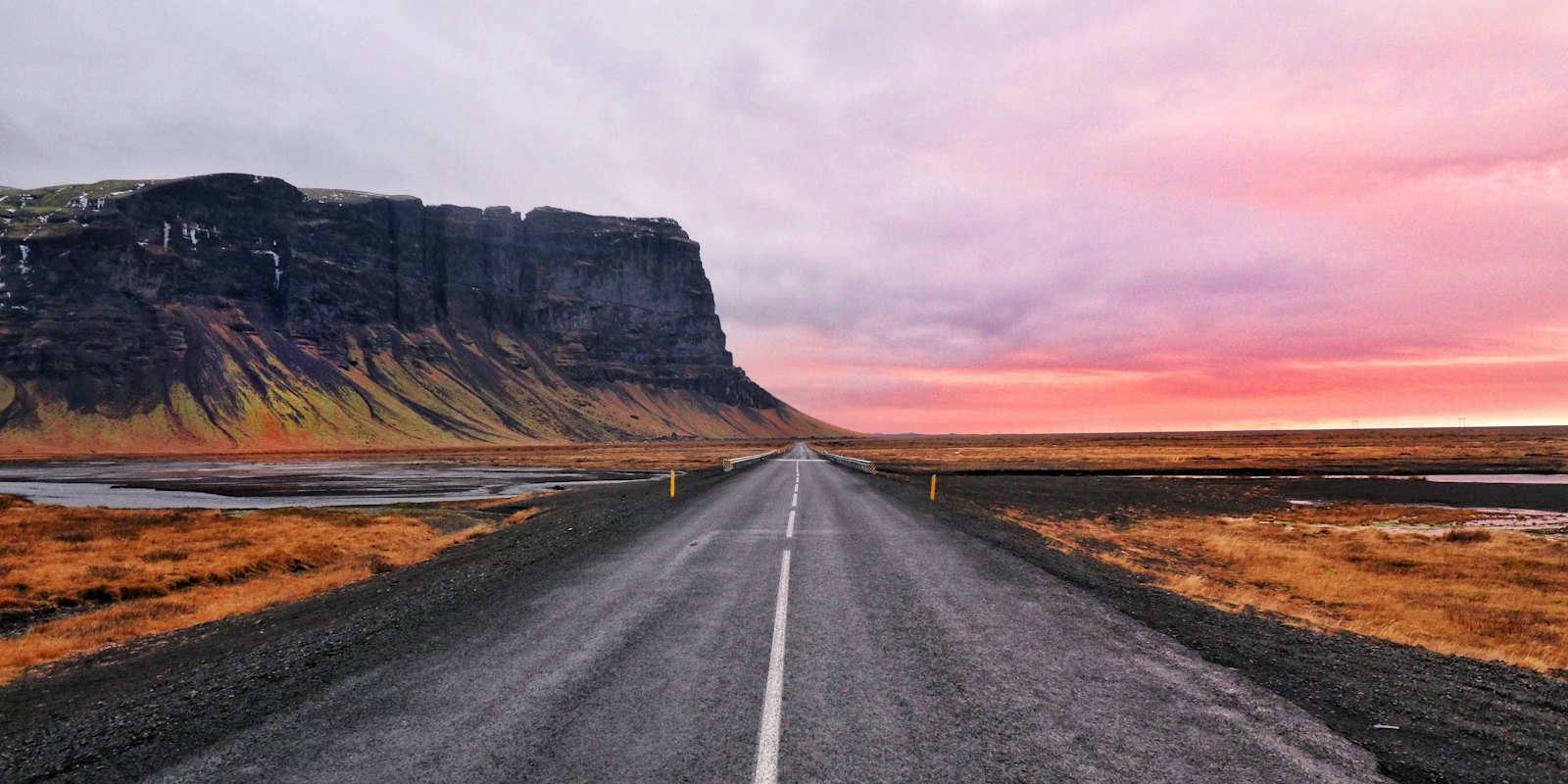
Iceland is a country built for slow driving. One paved road loops the whole island, campsites sit at the edge of most villages, and in summer the light lasts long enough that you can walk to a waterfall at 10 pm. A campervan lets you follow the weather instead of a hotel booking, cook your own food in an expensive country, and stop wherever the view earns it, as long as you sleep in the right place.
It suits travellers who are comfortable on gravel, happy to check forecasts every morning and willing to change plans when the wind picks up. It suits summer far better than winter. If you want to cross the Highlands, you’ll need a proper 4x4 and a clear sense of your own limits.
At a glance
| Best time to go | June to August for open campsites and Highland roads; September to April for northern lights |
| Trip length | At least 7 days for the Ring Road; 10–14 days to add Snæfellsnes and the Westfjords |
| Driving side | Right |
| Main route (distance) | Ring Road (Route 1), 1,322 km (821 mi), paved and open year-round |
| Overnight rules | Campervans must use campsites or have the landowner’s permission. No wild camping in vehicles |
| Currency | Icelandic króna (ISK) |
| Emergency number | 112 |
| Key official site | umferdin.is for live road conditions, plus safetravel.is |
Why go by campervan
The Ring Road connects most of Iceland’s towns and villages, and Visit Iceland notes that all of it is paved and open through the year, with a 4x4 not required. That makes a two-wheel-drive campervan a realistic choice for the main loop in summer. Campsites are spread around the country, so you can drive a few hours, walk, cook and sleep without packing up a hotel room every morning. Visit Iceland also flags that accommodation between Selfoss and Höfn is often hard to find in peak summer, which is one more reason a van makes life simpler on the south coast.
The van also gives you flexibility with weather. Iceland’s conditions change fast, and being able to shift a day east or west, or sit out a storm at a campsite, is worth a lot.
There are clear limits. Campsites are mostly open from May to September, according to Visit Iceland’s camping page, and the same page says motorhomes should only travel short distances in winter, if at all. Campervans are sensitive to wind. Vegagerðin, the road authority, advises delaying travel during severe weather where possible. And a standard campervan has no business on F-roads, the mountain tracks into the Highlands.
Our view: a campervan is a strong choice from late May to mid-September. Outside that window, you need a winter plan and a backup bed for bad nights.
When to go
Summer brings long days, open campsites and, from late June or early July, open Highland roads. Shoulder months are quieter and cheaper but bring shorter days and the chance of snow on mountain passes. Winter is dark and stormy, with northern lights as the reward. Visit Iceland’s weather and climate page notes that Highland areas above 200–400 m (660–1,310 ft) are usually snow-covered from September until May or later, and that lowland winter temperatures often move above and below 0 °C (32 °F).
| Months | Weather | Daylight | Roads & access | Crowds |
|---|---|---|---|---|
| November–March | Lowland temperatures around 0 °C (32 °F); frequent storms and strong winds | About 4 hours of sun at the winter solstice | Ring Road open but temporary closures common; F-roads closed | Few campers; most campsites closed |
| April | Spring storms and snow possible | About 13 hours rising to 16 | Studded tyres must come off by 15 April; Highlands closed | Low |
| May | 2–11 °C (36–52 °F) through the month | About 17 hours rising to nearly 20 | Ring Road generally open; ice possible in the north and east early in the month; F-roads closed | Shoulder season |
| June | 7–14 °C (45–57 °F) | About 20–21 hours in Reykjavík | Some Highland roads begin to open; Kjölur (35) averages a 1 June opening | Busy |
| July | 8–15 °C (46–59 °F) | About 18–20 hours | Most F-roads open late June to early July | Busiest; heavy traffic between Reykjavík and Akureyri |
| August | Highs around 13 °C (55 °F); more rain late in the month | About 18 hours falling to 14.5 | Highlands open; campsites busy around the first Monday of August | Busy |
| September | Highs 9–12 °C (48–54 °F), lows 5–8 °C (41–46 °F) | About 14 hours falling to 11–12 | F-roads usually close from mid-September; many campsites close at month end | Quieter than summer |
| October | Reykjavík averages 2–7 °C (36–45 °F) | About 11–12 hours falling to 8 | Ring Road open with weather closures; mountain passes prone to closure | Less busy than summer |
Sources: Visit Iceland’s guides to May, summer, September, October, the midseasons and Christmas, and Vegagerðin’s mountain road opening table.
Northern lights. Visit Iceland puts the season at roughly September through April. Activity is usually strongest around midnight, and you need dark, clear skies. The tourism board points to the Icelandic Met Office at en.vedur.is for aurora and cloud-cover forecasts. You won’t see them in June or July because the sky stays too bright.
Routes to know
Ring Road (Route 1)
Distance: 1,322 km (821 mi). Days: at least 7, and 7–10 is more comfortable.
Visit Iceland gives the 1,322 km figure. In June 2026 a new section opened near Höfn, and Vegagerðin says it makes the Ring Road 12 km (7 mi) shorter, with four new two-lane bridges. The loop takes in the south coast, the Eastfjords and the north, and runs inland through Borgarfjörður, which means it skips Snæfellsnes and the Westfjords. Visit Iceland flags the mountain passes Holtavörðuheiði, Öxnadalsheiði and Möðrudalsöræfi as prone to closures, especially from September to May. The Öxi pass (Route 939) is a steep gravel shortcut that saves 68 km (42 mi) between Djúpivogur and Egilsstaðir. Whether it suits your van depends on the season and the van, so check conditions first.
Golden Circle
Distance: about 250 km (155 mi) round trip from Reykjavík. Days: 1, or 2 at an easy pace.
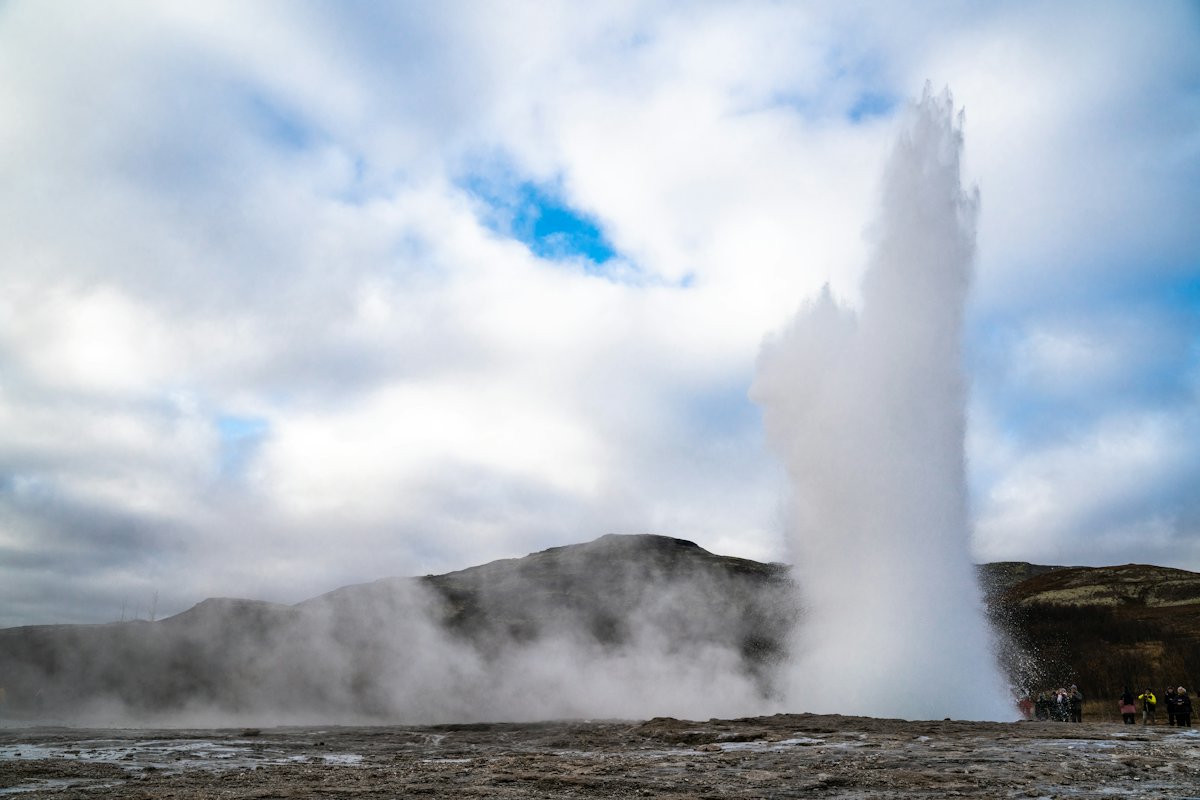
South Iceland’s tourism office lists the three main stops: Þingvellir National Park, the Geysir geothermal area where Strokkur erupts every few minutes, and Gullfoss. Driving takes roughly 3–4 hours without stops, and the route is open all year with regularly serviced roads. Side stops include Kerið crater, Brúarfoss and the geothermal villages of Laugarvatn, Reykholt and Flúðir. Camping and overnight stays at Þingvellir are allowed only in marked camping areas.
Snæfellsnes Peninsula
Days: 2–3, often combined with the Golden Circle.
Visit Iceland describes a peninsula packed with variety: the Snæfellsjökull glacier and national park, black beaches, Djúpalónssandur with its 1948 shipwreck remains, the black church at Búðir, seals at Ytri Tunga, and the coastal path between Arnarstapi and Hellnar. Kirkjufell is roughly 2–2.5 hours from Reykjavík via the Hvalfjörður tunnel, Borgarnes and Route 54, which is paved along the north coast, according to Visit Iceland’s Kirkjufell guide. The Kirkjufellsfoss car park charges a small fee. At Arnarstapi and Hellnar, camping is allowed only in marked areas.
Westfjords Way
Distance: about 950 km (590 mi). Days: at least 4–5.
The Westfjords tourism office says most of the main route is paved, though some sections and roads to individual sights are gravel, and driving takes longer than the map suggests. A 4x4 is not normally needed on the main route. Highlights include Dynjandi, Látrabjarg, Rauðasandur and geothermal pools. Fuel is available in towns and villages but services can be far apart, so refuel often. The route can be driven in winter, with snow, ice and strong winds to expect. Visit Iceland’s 14-day itinerary gives the Westfjords 3 days and mentions the Baldur ferry to Stykkishólmur as an alternative to driving back.
Highlands and F-roads (summer only)
Season: roughly late June to mid-September. Vehicle: a suitable 4x4, never a standard campervan.
Safetravel says F-roads are usually closed from mid-September until June or July. Not every 4x4 is suitable: some F-roads are fine for a small SUV, others need a large 4x4, and some need a modified superjeep. Opening depends on snow. Vegagerðin’s table shows Sprengisandur (F26) opened on average on 6 July over 2021–2025, and the Sigalda–Landmannalaugar section of F208 on 2 June. Kjölur (35) has lost its F-road status after improvements, according to Vegagerðin’s Highland page, which also says Sprengisandur can only be driven in large 4x4s and superjeeps.
Where you can sleep
Campsites
Campsites are the default for a campervan. Visit Iceland says most are open from May to September, with some open all year and exact dates set by weather and ground conditions. In summer they usually fill up around 6–7 pm, so either prebook or arrive earlier. The long weekend around the first Monday in August (verslunarmannahelgi) gets crowded.
Most sites charge 2,000–3,500 ISK (about US$20–30) per person per night, as of October 2026, per Visit Iceland. Children under 12, and sometimes under 15, usually stay free. Electricity, showers and washing machines cost extra. Prices change, so check each site.
Wild camping: what the law says
The rule is clear. Under the Nature Conservation Act no. 60/2013, the Environment Agency of Iceland says overnight stays in campervans, caravans, tent trailers and similar vehicles outside organised campsites or urban areas require the permission of the landowner or rightholder. Permission is also needed near homes or farms, for more than one night, and on cultivated land. Safetravel and Visit Iceland both state plainly that wild camping is not permitted.
The narrow one-night tent exception does not apply to vehicles. Sleeping in your van in a roadside lay-by, a viewpoint car park or a trailhead counts as an overnight stay outside a campsite.
Protected areas add their own rules, per the Environment Agency:
- Vatnajökull National Park: campervans and caravans must use organised campsites.
- Þingvellir National Park: no camping or overnight stays outside marked areas.
- Marked areas only: Arnarstapi and Hellnar, Mývatn, Skógafoss, Vatnsfjörður and Hornstrandir.
- Camping not allowed: places including Dyrhólaey, Dimmuborgir, Hverfjall/Hverfell, Álafoss, Skútustaðagígar and Teigarhorn.
Campfires are prohibited in Iceland, according to Safetravel.
Services and dump stations
Many campsites offer fresh water and waste disposal for motorhomes. The Hvolsvöllur campsite listing on Visit Iceland, for example, mentions waste disposal for mobile homes, water and electricity, with a season from 1 April to 1 November. Facilities vary, so check each listing before you rely on it. Empty toilet cassettes only at designated disposal points.
Driving rules and road conditions
Speed limits
Safetravel and island.is give the standard limits: 50 km/h (31 mph) in urban areas, 80 km/h (50 mph) on gravel roads and 90 km/h (56 mph) on paved rural roads, unless signs say otherwise. Single-lane bridges carry a 50 km/h limit. Speed cameras send tickets to the registered owner, and fines rise with speed. Vegagerðin notes that 90 km/h is the fastest legal speed in the country.
Other rules
- Headlights and taillights must be on at all times, all year.
- Everyone must wear a seatbelt.
- Off-road driving is strictly forbidden. Vegagerðin says it can lead to prosecution, substantial fines or imprisonment under the Nature Conservation Act. F-roads and gravel roads are roads; driving off them is off-road.
- On blind crests, keep to the far right and slow down, per Safetravel’s road signs guide.
- A closed road sign means no driving at all.
Licences
According to island.is, licences from EEA countries are accepted, and licences from non-EEA countries are valid in Iceland for 6 months. The page does not address International Driving Permits, so if your licence is not in the Latin alphabet, contact the Icelandic Transport Authority before you travel.
Gravel, bridges and sheep
Gravel roads are often uneven. Slow down before the pavement ends, since tyres can lose grip at the transition, and loose stones from passing cars can crack windscreens. Dust can cut visibility in dry weather. At single-lane bridges, the car that reaches the bridge first crosses first. Sheep roam freely near roads from late spring through summer and can step into the road with little warning.
Wind and weather
Campervans catch wind. Vegagerðin advises securing loads, closing all doors, windows and hatches, keeping a safe distance from large vehicles in gusts, and postponing travel during severe weather. Glacial rivers, including some on the Ring Road, can flood, and the area south and east of Vatnajökull is most prone, so check warnings if you’re heading that way.
River crossings
Safetravel is blunt: no insurance covers damage to a vehicle while crossing a river. Depth and current change constantly. If unsure, turn around or wait for other travellers. If you do cross, drive slowly in the lowest gear, don’t change gear in the water, and angle downstream.
Winter driving and tyres
Studded tyres are permitted from 1 November to 15 April, and winter tyres on cars need at least 3 mm of tread, according to Reykjavík City. Visit Iceland recommends a 4x4 in winter and says to budget for a night or two in a guesthouse in case of severe weather. Roads can close without warning in storms.
Where to check conditions
- umferdin.is: live road closures and conditions, in English. Traffic service phone: 1777.
- safetravel.is: alerts and the SafeTravel app.
- en.vedur.is: forecasts, wind maps, aurora and cloud cover.
- 112.is: emergency number 112, reachable by phone, app, SMS or web chat.
What it costs
| Item | Cost | Source and date |
|---|---|---|
| Campsite, per adult per night | 2,000–3,500 ISK (about US$20–30) | Visit Iceland, checked Oct 2026 |
| Petrol 95 / diesel, per litre | About 284 ISK / 333 ISK at one south coast station | fuel-prices.eu, 23 Oct 2026 |
| Kilometre fee, vehicles up to 3.5 t | 6.95 ISK per km | island.is, 2026 rate |
| Hornafjörður Ring Road toll, single trip | 1,500 ISK (under 3.5 t); 2,100 ISK (3.5–7.5 t) | Vegagerðin, from 1 Sep 2026 |
| Þingvellir parking, per day | 1,000 ISK (car, 5 seats or fewer); 1,200 ISK (6–9 seats) | Þingvellir National Park, checked Oct 2026 |
A few notes. The kilometre fee applies to all vehicles from 1 January 2026, and heavier vehicles pay more per km; rental companies collect it in different ways, so read your agreement. The Hornafjörður toll is collected by camera, with no booths. The Vaðlaheiðargöng tunnel near Akureyri is also tolled and paid at veggjald.is; we couldn’t confirm the current price from the official site, so check before you drive. Most fuel stations are self-service and accept only cards with a PIN, per Visit Iceland. The fuel figures come from a station price tracker, not an official source, and they change often.
To budget, start with campsite fees for each person each night, add fuel for your planned distance plus the kilometre fee, then tolls and parking at major sights. Iceland is an expensive country, and prices here are a snapshot from October 2026. Build in a cushion for a guesthouse night if the weather turns.
Tips
- Check umferdin.is every morning. Road closures can appear overnight, and the site shows them live in English.
- Read the wind forecast, not only the temperature. A tall van feels gusts far more than a car. If Vegagerðin or the Met Office is warning of strong wind, wait it out.
- Arrive at campsites before 6 pm in summer. Visit Iceland says sites usually fill around 6–7 pm.
- Carry a card with a PIN. Most fuel stations are unstaffed and won’t take cards without one.
- Fill up when you can in the Westfjords and East. Distances between stations vary, and services can be far apart.
- Open doors carefully. Park so the door faces away from the wind and keep a firm grip on it.
- Slow down before the asphalt ends. Many accidents happen where pavement turns to gravel.
- Treat F-roads as a separate trip. The Highlands need a suitable 4x4 and an open road. Leave the campervan for the Ring Road.
- Respect every closed sign. Closed means no driving, and driving closed mountain roads can bring heavy fines.
- Plan a backup bed outside summer. Visit Iceland suggests budgeting a night or two indoors in case of severe weather.
Frequently asked questions
Can you wild camp in a campervan in Iceland?
No. Under the Nature Conservation Act no. 60/2013, the Environment Agency of Iceland says overnight stays in campervans and caravans outside organised campsites or urban areas require the landowner’s permission. In practice that means sleeping at a campsite. Some protected areas, such as Vatnajökull National Park and Þingvellir, are stricter still.
Can you drive a campervan on F-roads in Iceland?
A standard campervan is not suited to F-roads. Safetravel says F-roads need a suitable 4x4, with some routes requiring large 4x4s or modified superjeeps, and that no insurance covers damage from river crossings. F-roads are usually closed from mid-September until June or July.
How long does it take to drive the Ring Road in Iceland?
Visit Iceland recommends at least 7 days for the 1,322 km (821 mi) Ring Road, and 7–10 days is a more relaxed pace. Adding the Westfjords and Snæfellsnes pushes a trip to around two weeks. Allow extra time for weather and gravel side roads.
Is it safe to travel Iceland by campervan in winter?
It is possible but demanding. Visit Iceland says motorhomes should only travel short distances in winter, if at all, and recommends a backup guesthouse night for storms. Most campsites close after September, roads can close without warning, and campervans are sensitive to strong wind.
What is the speed limit in Iceland?
The limits are 50 km/h (31 mph) in towns, 80 km/h (50 mph) on gravel roads and 90 km/h (56 mph) on paved rural roads, unless signs say otherwise. Single-lane bridges are limited to 50 km/h. Speed cameras are common, and fines increase with speed.