Scotland by campervan: the complete guide
Plan a Scotland campervan trip: NC500, Skye and the Hebrides, CalMac ferry bookings, single-track roads, where you can legally sleep, midges and costs.
- Best Apr–Jun & Sep–Oct
- NC500 alone: 5–7 days
- Drive on the left
- NC500 830 km · 516 mi

João & Maria · Updated · 14 min read
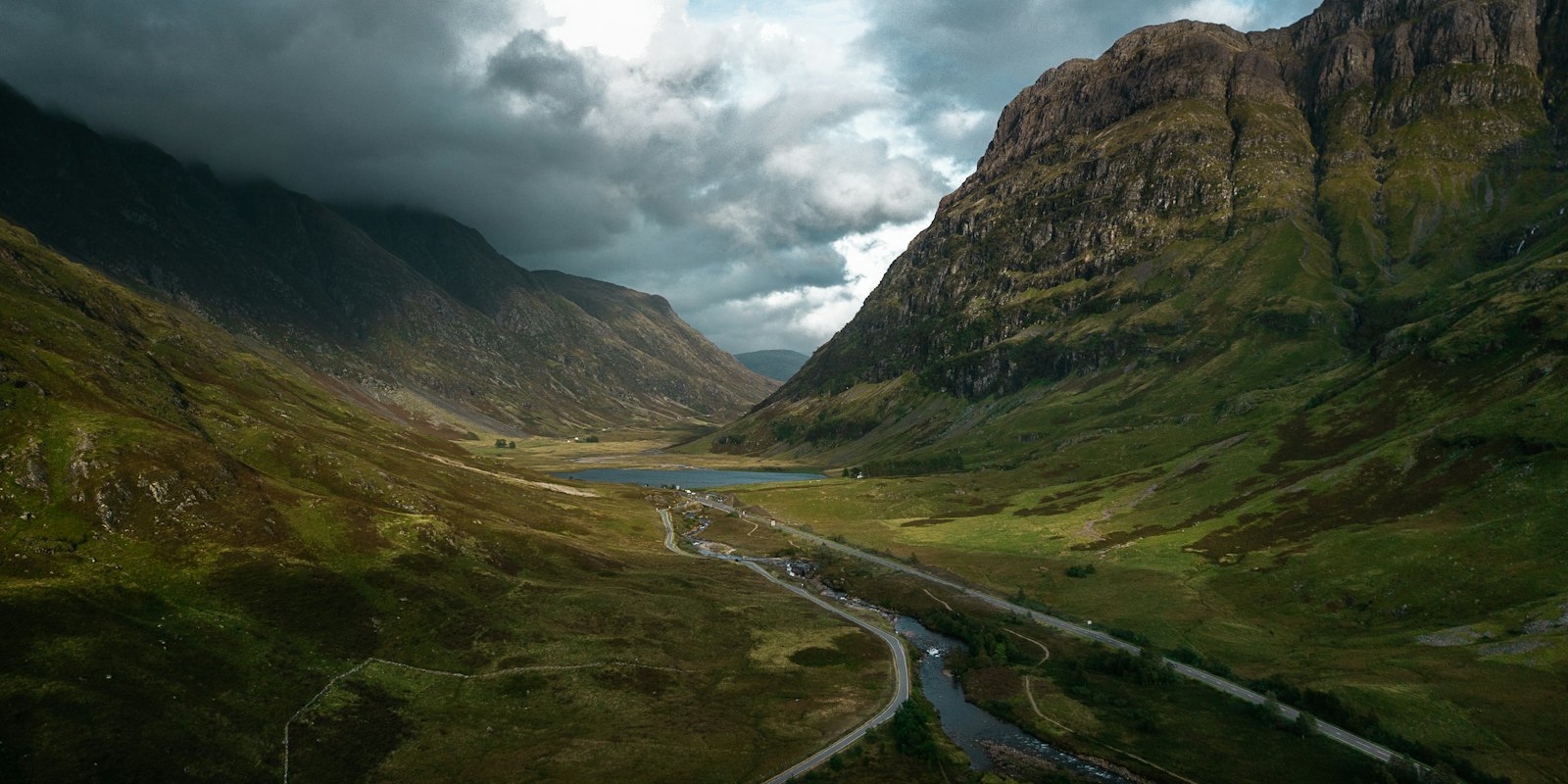
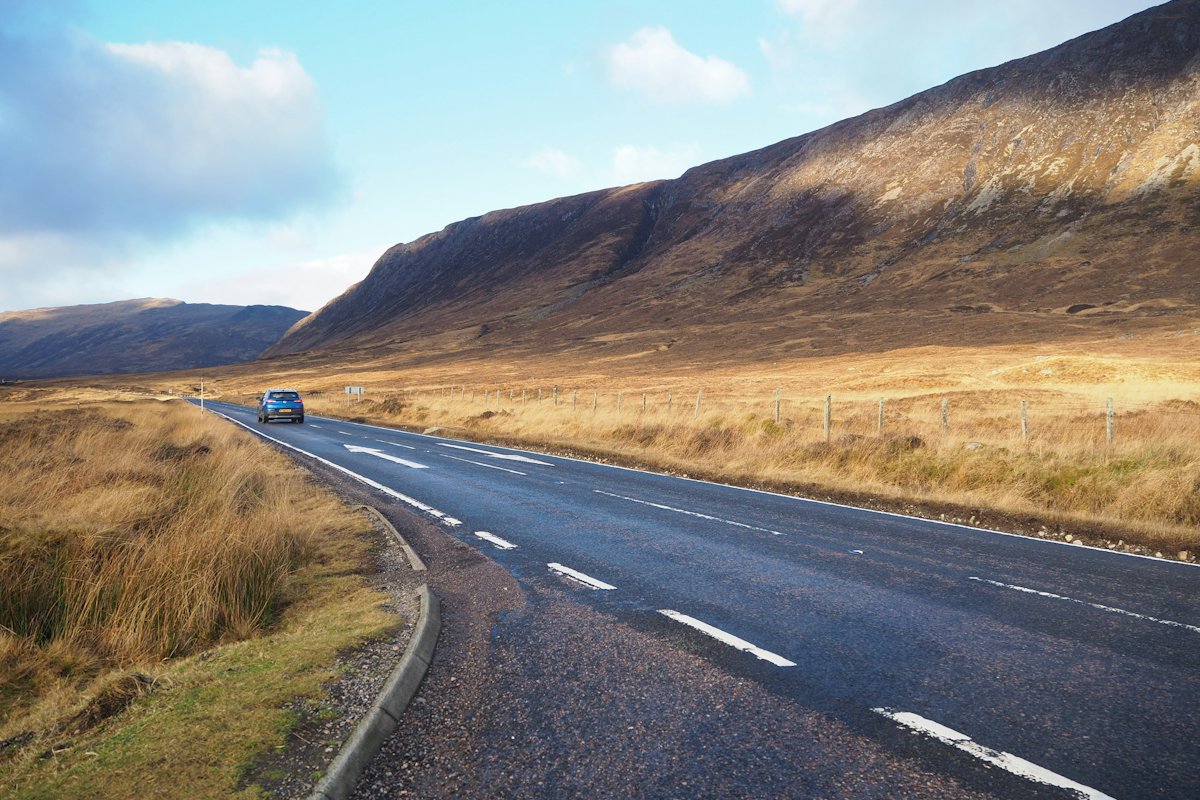
Scotland suits a campervan well. The roads are quiet once you leave the Central Belt, the coast is never far away, and the best places sit at the end of narrow roads with no hotel for miles. A van lets you wake up close to the walk or the ferry you came for, and change plans when the weather does.
It suits travellers who are happy to plan around ferries, single-track roads and rain. It suits people less well if they want to park anywhere for the night. Scotland’s famous right to roam does not extend to vehicles, and much of this guide explains what that means in practice.
At a glance
| Best time to go | April to June and September to October for milder weather and fewer crowds |
| Trip length | 5 to 7 days for the North Coast 500 alone; we’d allow 10 to 14 days to add Skye or the Hebrides |
| Driving side | Left |
| Main route (distance) | North Coast 500 loop from Inverness, 830 km (516 mi) |
| Overnight rules | Access rights don’t include vehicles: use campsites, permitted stopovers, or laybys where overnight parking isn’t prohibited |
| Currency | Pound sterling (£) |
| Emergency number | 999 (police non-emergency: 101) |
| Key official site | visitscotland.com |
Why go by campervan
The Highlands and islands are thinly populated, and accommodation along the most popular routes fills early in summer. VisitBritain’s NC500 itinerary says advance booking is essential even with “many hotels and campsites along the way.” A van does not remove the need to book, but it widens your options. You can pick from campsites, forest car parks in the official Stay the Night scheme, and permit areas, and you carry your kitchen and bed onto the ferry with you.
A van also handles Scotland’s weather better than a tent. The west is wet. The Met Office’s long-term averages for Stornoway show about 1,236 mm (48.6 in) of rain a year, falling on roughly 206 days. A dry, heated space at the end of the day matters.
There are reasons to think twice. Many Highland and island roads are single track, and a large motorhome makes them slower and more stressful. Visit Outer Hebrides warns that some single-track roads there are unsuitable for larger motorhomes. CalMac does not let motorhomes and campervans wait in standby queues at manned ports, so island trips need ferry bookings. And in winter, short days, frost and snow gates on the high Cairngorm roads make long drives harder. If you want total spontaneity, a small van and the shoulder seasons give you the most room.
When to go
Spring brings the sunniest weather of the year. At both Inverness and Stornoway, May has the highest average sunshine in the Met Office’s 1991–2020 records. Summer is the warmest and busiest season, with long evenings and the peak of midge season. VisitScotland’s North Coast 500 page points to April to June and September to October for milder weather and fewer crowds. Winter is quiet and dark, and some attractions cut their hours.
| Months | Weather | Daylight | Roads & access | Crowds |
|---|---|---|---|---|
| Mar–May | Average highs 9.5–14.8°C (49–59°F) in Inverness and 8.5–12.6°C (47–55°F) in Stornoway; April is Inverness’s driest month | Lengthening fast | Loch Lomond camping byelaws start 1 March; midges begin in May | Lower than summer |
| Jun–Aug | Highs 17.0–19.0°C (63–66°F) in Inverness, 14.5–16.4°C (58–62°F) in Stornoway | About 18 hours in Inverness on 21 June; the far north never gets fully dark | Ferries and campsites book up; midge peak | Highest |
| Sep–Nov | Highs fall from 16.5°C to 9.5°C (62°F to 49°F) in Inverness; Stornoway averages about 20 rain days in October and November | Shortening; about 10.5 hours in Inverness by mid-October | Byelaw season ends 30 September; midges fade through October | Lower after August |
| Dec–Feb | Highs about 7–8°C (45–46°F), lows 1–3°C (34–37°F); Inverness averages about 9 air-frost days in December and January | About 6.5 hours in Inverness on 21 December | Snow gates on high Cairngorm roads; fewer Stay the Night car parks | Lowest |
Temperatures and rainfall are 1991–2020 averages from the Met Office for Inverness and Stornoway. Midge season dates come from VisitScotland, and the far-north daylight note from VisitScotland’s weather page. Inverness day lengths are from sunrisesunset.io, a secondary source.
Routes to know
North Coast 500
The NC500 is a loop of 830 km (516 mi) that starts and finishes in Inverness and can be driven in either direction. VisitScotland puts the nonstop driving time at 11 to 13 hours and says most visitors spend 5 to 7 days. The west side runs through Applecross and Torridon to Ullapool, then along the north coast past Smoo Cave near Durness to John o’ Groats and Duncansby Stacks. The Bealach na Bà, the pass over to Applecross, has tight hairpins, and VisitScotland advises checking your vehicle’s size before setting off. Parts of the whole route are narrow or single track.
Road to the Isles and the Isle of Skye
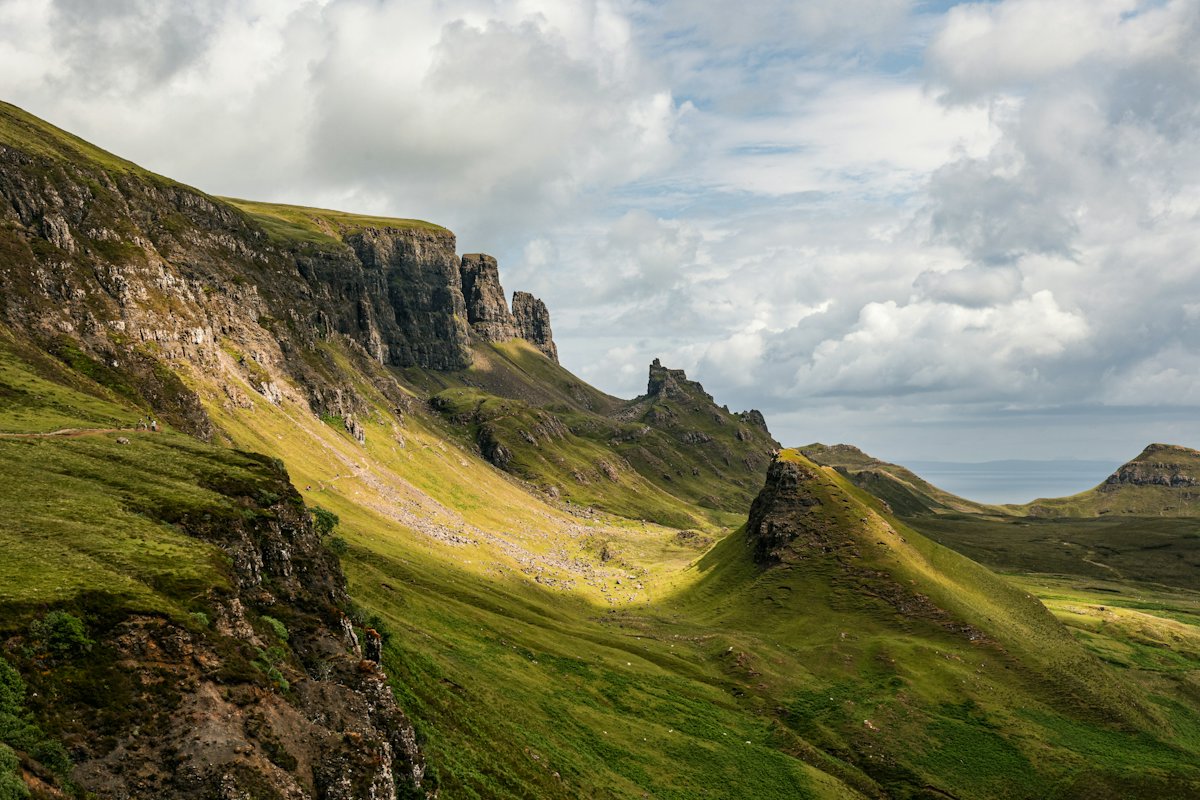
The A830 from Fort William to the ferry port of Mallaig runs 74 km (46 mi) past Glenfinnan and Arisaig (Wikipedia, a secondary source). From Mallaig, CalMac sails to Armadale in Sleat on Skye. The other way on is the Skye Bridge from Kyle of Lochalsh. VisitScotland puts the drive from Inverness to Portree at about 3 hours. Allow 3 to 5 days for Skye to take in Trotternish (the Old Man of Storr, Kilt Rock, the Quiraing), the Fairy Pools and Neist Point. Some Skye roads are single track.
The Outer Hebrides
The official Hebridean Way runs 297 km (185 mi) from Vatersay to the Butt of Lewis lighthouse, crossing ten islands by causeways and two ferries: the Sound of Barra (40 minutes) and the Sound of Harris (1 hour), according to the Visit Outer Hebrides route leaflet. It is signed for cyclists, but it follows the same road spine a van would. Reach the islands from Uig on Skye to Tarbert on Harris, or from Ullapool to Stornoway on Lewis. We’d allow 5 to 7 days. Overnight parking in the islands is limited to campsites and approved spots.
Argyll Coastal Route
This route runs 208 km (129 mi) between Tarbet on Loch Lomond and Fort William, which VisitScotland’s route list puts at about 3 hours of driving. It passes sea lochs, mountains and Castle Stalker. It is a good first leg from Glasgow, and links to Oban for the Mull ferries. Plan 2 to 3 days. Its southern end runs through Loch Lomond & The Trossachs National Park, where seasonal camping byelaws apply.
Snow Roads Scenic Route
The Snow Roads run 145 km (90 mi) from Blairgowrie to Grantown-on-Spey through the Cairngorms, over what VisitScotland calls Britain’s highest public roads. One or two days is enough. In winter, Aberdeenshire Council can close snow gates on the A93 at Glenshee and the A939 at the Lecht, on the council’s advice and with police authority.
Where you can sleep
Campsites
Campsites are the default for a campervan in Scotland. VisitScotland notes that many have showers, kitchens, drying rooms and waste points, and that some are open all year. Book early in peak season. We couldn’t find an official source for typical nightly pitch prices, so check each site’s own rates.
What the Outdoor Access Code does and doesn’t cover
Scotland’s access rights let people wild camp with a lightweight tent, in small numbers, for two or three nights in one place, according to NatureScot’s Outdoor Access Code site. They do not cover vehicles. The same page states that access rights don’t include motor vehicles, and that if landowners restrict or regulate parking on their land, you must respect this.
The Scottish Government’s 2022 submission to a parliamentary petition sets out the wider position:
- The Code does not extend to motorised vehicles. NatureScot’s guidance says it is legitimate for land managers to prohibit off-road parking.
- Parking a vehicle without lawful authority may constitute trespass.
- Overnight parking is permitted in laybys on the trunk road network unless prohibited by road orders and signage.
- Local authorities can block or regulate their car parks, and posted conditions apply. Private car parks, such as supermarkets, can enforce their own signed rules.
Loch Lomond & The Trossachs camping management zones
From 1 March to 30 September, byelaws in the park’s camping management zones mean you can only stay overnight at an official campsite or a permit area. The park’s motorhome Q&A lists three motorhome permit areas: Firkin Point and Inveruglas on the west side of Loch Lomond, and Three Lochs Forest Drive near Aberfoyle. Permits cost £4.30 per vehicle per night, with an extra £3 vehicle charge at Three Lochs Forest Drive (prices listed in October 2026). Stays are limited to three nights. You can arrive from 1pm and must leave by 11am. Book through the park website. Breaking the byelaws can lead to a fine of up to £500. Outside the byelaw season, the Outdoor Access Code applies as elsewhere. The park keeps a list of campsites that take motorhomes.
Forestry and Land Scotland’s Stay the Night
Selected forest car parks allow self-contained vehicles to stay one night, between 6pm and 10am. It costs £10 at most sites and £13 at the four with chemical waste disposal (Achnabreac, Strone Hill, Bridge of Orchy and Glen Lochy), paid through RingGo. Spaces are first come, first served. You can’t return to the same car park within 48 hours, and no fires, barbecues, generators, pop-up tents or toilets are allowed outside the vehicle. Fewer car parks take part in winter, so check the destination list before you go.
Islands
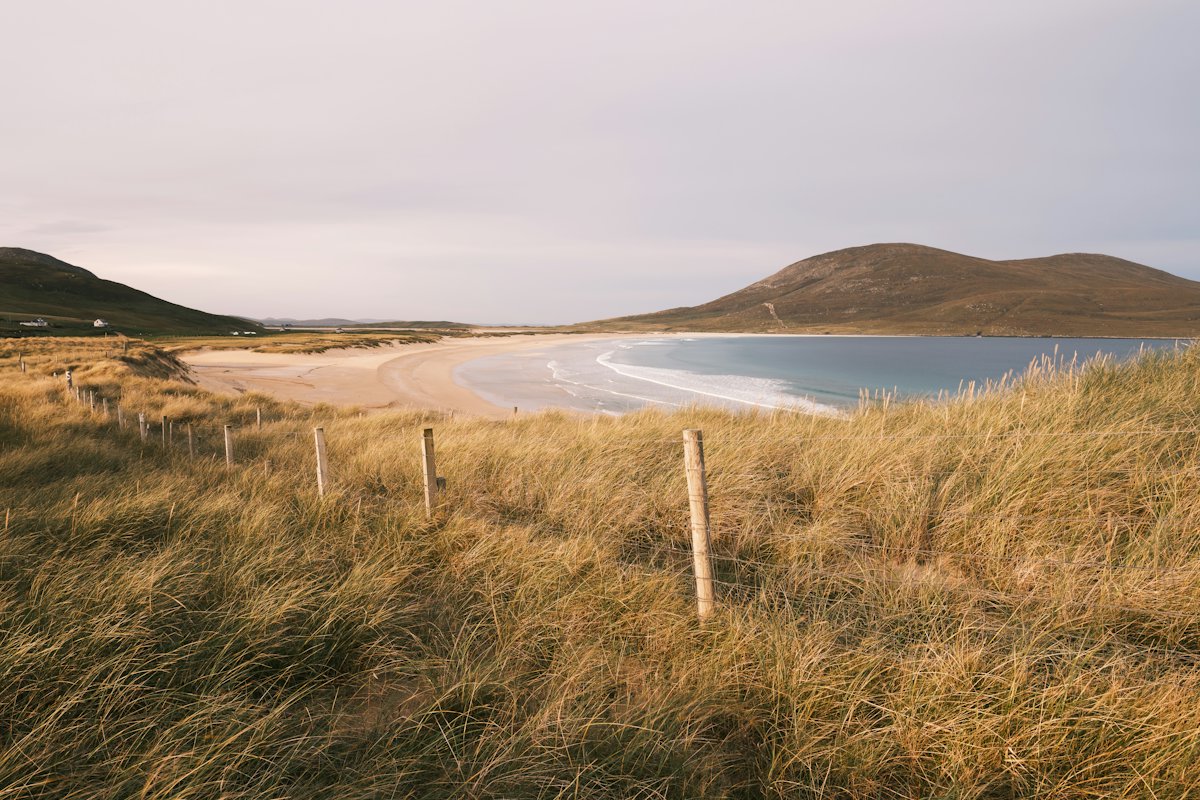
On the Outer Hebrides, overnight parking is only permitted in campsites or approved spots shown on the Visit Outer Hebrides map. Never drive or park on the machair or dunes. CalMac adds that you must book a pitch in advance on Mull and Tiree, that wild camping with any vehicle is not permitted on Tiree, and that Gigha can’t accommodate motorhomes over 7 m.
Waste and water
Empty chemical toilets only at designated disposal points, never in bins, drains, public toilets or the countryside. Campsites have waste points, and Visit Outer Hebrides notes that many campsites accept chemical waste for a small fee. Forestry and Land Scotland charges £5 for chemical waste drop-off only at its four disposal sites. The Scottish Government’s Rural Tourism Infrastructure Fund has paid for motorhome waste facilities, and Transport Scotland has approved road signs pointing to them. Take your rubbish with you if bins are full.
Driving rules and road conditions
Driving on the left
The Highway Code’s Rule 160 is to keep to the left unless signs or markings say otherwise. It is easiest to forget on an empty single-track road or when pulling out of a passing place.
Speed limits
National limits from GOV.UK apply unless signs show otherwise:
| Vehicle | Built-up areas | Single carriageway | Dual carriageway | Motorway |
|---|---|---|---|---|
| Motorhome up to 3.05 tonnes unladen | 30 mph (48 km/h) | 60 mph (96 km/h) | 70 mph (112 km/h) | 70 mph (112 km/h) |
| Motorhome over 3.05 tonnes unladen | 30 mph (48 km/h) | 50 mph (80 km/h) | 60 mph (96 km/h) | 70 mph (112 km/h) |
The heavier band is set by unladen weight, so check your vehicle’s documents. UK speed signs are in miles per hour.
Licences
Rules for driving in Great Britain on a foreign licence depend on where the licence was issued and what you’re driving. Use the official GOV.UK licence checker before you travel, and confirm your vehicle’s category is covered.
Single-track roads and passing places
Highway Code Rule 155 sets the etiquette. If a vehicle is coming toward you, or the driver behind wants to pass, pull into a passing place on your left, or wait opposite one on your right. Give way to traffic coming uphill when you can, and reverse to a passing place if needed. Slow down for walkers, cyclists and horse riders. Rule 156 adds: do not park in passing places. Police Scotland also asks drivers to slow for blind summits and hidden dips, and to expect livestock on the road.
Ferries
CalMac runs most west coast and island ferries. Book your vehicle in advance. If you arrive without a booking in a motorhome or campervan, you can’t join the standby queue. If the next sailing has space, port staff may sell you a ticket for it. The same applies to small, car-sized campervans. On unmanned routes such as the Sound of Barra and Sound of Harris, unbooked motorhomes load last, only if space permits.
CalMac uses the DVLA “Motor Caravan” registration to define a motorhome or campervan, and fares rise steeply by length band. Measure your van with any bike rack fitted. Declare LPG and other dangerous goods to your departure port at least 24 hours before travel, turn gas off at the cylinder before boarding, and don’t use gas appliances during the crossing.
Live conditions and weather
Traffic Scotland shows incidents, roadworks, weather warnings, cameras, snow gates and a live gritter tracker for trunk roads. Check the Met Office forecast for the area you’re heading to, and CalMac’s service status before any crossing. Snow falls on 10 to 20 days a year on average, with more in the Highlands.
What it costs
| Item | Cost | Source and date |
|---|---|---|
| Loch Lomond motorhome permit | £4.30 per vehicle per night (plus £3 vehicle charge at Three Lochs) | LLTNPA, listed October 2026 |
| Stay the Night forest car park | £10 per night; £13 with chemical disposal; £5 disposal only | Forestry and Land Scotland, October 2026 |
| Diesel (UK average) | 199.33p per litre | GOV.UK weekly road fuel prices, week of 19 October 2026 |
| Petrol (UK average) | 174.57p per litre | GOV.UK, week of 19 October 2026 |
| Ferry Mallaig–Armadale (Skye) | Campervan up to 6 m £12.80 single; 6–8 m £32.00 | CalMac fare sheet, 2025–26 |
| Ferry Uig–Tarbert (Harris) | Up to 6 m £41.90 single; 6–8 m £104.75 | CalMac summer 2026 fare sheet |
| Ferry Ullapool–Stornoway (Lewis) | Up to 6 m £66.75 single; 6–8 m £166.90 | CalMac fare sheet, 2025–26 |
| Ferry passengers | Adults £3.85 (Mallaig–Armadale), £8.50 (Uig–Tarbert), £12.30 (Ullapool–Stornoway) single, listed separately from vehicle fares | Same CalMac sheets |
Prices change, and fuel prices are UK averages that individual stations can differ from. Ferries are the cost that moves a budget most. A van over 6 m pays roughly two and a half times the under-6 m fare on these routes, so length matters as much as distance. Build your budget around nights (campsite, permit area or Stay the Night), fuel for the distance you plan, and each crossing for both vehicle and passengers. Then add a margin for weather days, when you’ll likely want a campsite with hook-up and a drying room.
Tips
- Book ferries before anything else. Motorhomes and campervans can’t use CalMac standby queues, so fix your crossings first and plan nights around them.
- Know your exact length and weight. Length sets your ferry band, and unladen weight above 3.05 tonnes lowers your speed limits.
- Treat passing places as shared space. Pull in on the left, wait opposite on the right, and never park in one, even for a photo.
- Let traffic pass. If a queue builds behind you on a single-track road, pull into the next passing place and let it go.
- Have a booked or legal stop every night. Access rights don’t cover vehicles, and in the Outer Hebrides and Loch Lomond’s zones the rules are stricter still.
- Plan your waste stops. Note where the next campsite or disposal point is before tanks fill up, since the islands and the far north have long gaps.
- Check the midge forecast. VisitScotland points to the Smidge midge forecast. Keep a head net and repellent in the cab from May to October, and avoid still, damp evenings by water.
- Check Traffic Scotland each morning in winter. Snow gates, gritting and weather warnings all appear on its map.
- Turn your gas off before boarding. CalMac requires gas off at the cylinder, and dangerous goods declared 24 hours ahead.
- Respect posted parking rules. Landowners and councils can restrict overnight parking, and signs in a car park set the terms.
Frequently asked questions
Is wild camping in a campervan legal in Scotland?
Scotland’s access rights allow lightweight tent camping, but they do not include motor vehicles. Sleeping in a van outside a campsite depends on where you park: landowners can prohibit off-road parking, and parking without lawful authority may be trespass. The Scottish Government says overnight parking in trunk road laybys is permitted unless road orders and signs prohibit it. Campsites, permit areas and official stopovers are the safe choice.
Do I need a permit to camp in a campervan at Loch Lomond?
Between 1 March and 30 September, the camping management zones in Loch Lomond & The Trossachs National Park only allow overnight stays at official campsites or permit areas. Motorhome permit areas are at Firkin Point, Inveruglas and Three Lochs Forest Drive. Permits were listed at £4.30 per vehicle per night in October 2026, with stays of up to three nights. Outside those dates, no permit is needed.
Do I need to book CalMac ferries for a campervan?
Yes, booking is strongly advised. CalMac does not let motorhomes or campervans join standby queues at its ports, even if the van is car-sized. If you arrive without a booking, you may be sold a ticket for the next sailing only if space remains. On unmanned routes like the Sound of Harris, unbooked motorhomes board last if there is room.
What is the speed limit for a motorhome in Scotland?
For motorhomes up to 3.05 tonnes unladen weight, the limits match cars: 30 mph in built-up areas, 60 mph on single carriageways and 70 mph on dual carriageways and motorways. Motorhomes over 3.05 tonnes are limited to 50 mph on single carriageways and 60 mph on dual carriageways, with 70 mph on motorways. Local signs can set lower limits.
When is midge season in Scotland?
VisitScotland says midges are active from May to October, peaking in mid-summer. They are worst in the early morning and evening, especially on calm, overcast days, and are mainly found in the west Highlands, the islands and damp rural areas. Midges don’t spread disease, but bites itch, so a head net and repellent help.