Campervan packing list: what to bring and what's in the van
What rental campervans usually include, what to pack yourself, licence rules by country, plug types, and the food rules for NZ, Tasmania and Australia.

João & Maria · Updated · 14 min read
- NZ fine NZ$400 undeclared
- AU notice up to A$7,280
- Norway: 3 months non-EU
- Type I plugs in NZ & AU
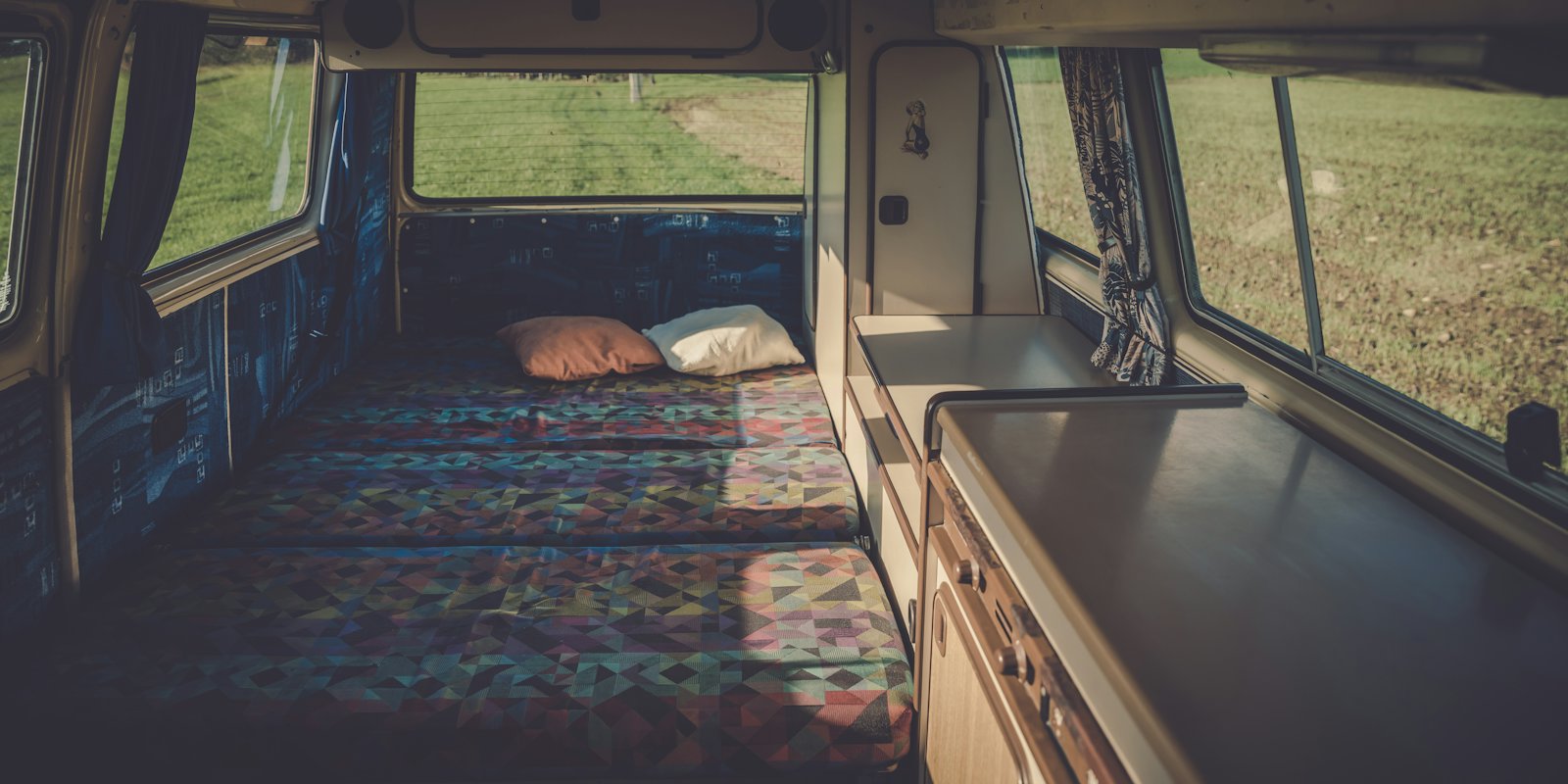
A campervan is a small home with a fixed amount of space. Everything you bring has to fit in a locker, under a seat or in a bag you can stow while driving. Pack too little and you spend the first day in a supermarket. Pack too much and you trip over a suitcase every night.
This list covers what rental vans usually supply, what is worth bringing from home, and the parts of packing that are set by law: the documents you need to drive, and the food and gear you cannot carry across some borders. The legal sections are drawn from official sources. The rest is practical advice. Check your own booking, because what is included varies a lot between vans.
The short version
- Documents first. Your full driver’s licence, plus an International Driving Permit (IDP) or approved translation if your licence is not in English or uses a non-Latin script. Rules differ by country, so check the table below.
- Clothes in layers, packed in soft bags.
- A few kitchen upgrades: a sharp knife, a good pan, coffee gear, food bags.
- Your own pillow if you sleep badly on unfamiliar ones.
- Power: a 12V or USB car charger, a multi-port USB charger and the right plug adaptor.
- A proper first aid kit and a torch with spare batteries.
- Leave fresh food behind if you are flying into New Zealand or Australia, or sailing to Tasmania. Declare anything you are unsure about.
What rental vans usually include
Rental vans are usually sold with a “kitchen kit” and a “bedding kit”. Some include them in the price. Others charge extra. The contents also vary by van size and class. If you are still choosing a vehicle type, our guide to Class A, B and C motorhomes explains the differences.
A typical kitchen kit has:
- A gas or electric hob, sometimes a small oven or microwave in bigger vans
- One or two pots, a frying pan and a kettle
- Plates, bowls, mugs, glasses and cutlery for the number of people booked
- Basic utensils, a chopping board and a washing-up bowl
- A fridge, sometimes with a small freezer section
A typical bedding kit has a duvet or sleeping bag, pillows, sheets and towels for each person. Camping chairs and a table are often add-ons.
Before you pack, ask for the exact inventory: is bedding included, are towels included, and is there a toaster or coffee maker. At pickup, open every locker and check the list.
Documents
Driving documents are the one thing you cannot buy on arrival. An IDP is issued in your home country before you travel. It is a translation and is only valid when carried with your licence. Iceland’s government describes it as “not valid on its own”, and Alberta’s government notes that you must carry it alongside your home licence.
| Country | What the official source says | Where to check |
|---|---|---|
| New Zealand | You can drive on a current, valid overseas licence or IDP. If your licence or permit is not in English, you must carry an accurate translation. | NZ Police |
| Iceland | Carry your national licence. Iceland’s government says an IDP is not valid on its own, so carry both if you have one. Confirm visitor rules with the Icelandic Transport Authority before you travel. | Samgöngustofa |
| Norway | Non-EU/EEA licences can normally be used for three months from arrival. You need an IDP as well if your licence has no photo, uses a non-Latin alphabet, or its categories differ from the Geneva or Vienna conventions. UK and Swiss licences are treated like EEA licences. | Statens vegvesen |
| Canada (Alberta) | Visitors can drive the same class of vehicle on a valid home licence for up to one year. Alberta strongly recommends getting an IDP before you arrive, and carrying it if your licence is not in English. | Alberta government |
| Australia (Tasmania) | Visitors can drive on an overseas licence that stays current during the stay. You must carry your licence. If it is not in English, you must also carry an official translation or an IDP. | Transport Tasmania |
Canadian and Australian licence rules are set by each province or state, so Alberta and Tasmania are shown as examples. For a long stay in New Zealand, check the current visitor time limit with the NZ Transport Agency. Rental companies can add their own conditions, so read your rental terms too.
Other papers worth carrying in a folder:
- Passport, and a photo of it saved offline
- Rental agreement and insurance documents
- Travel insurance policy number and emergency phone line
- Ferry bookings, such as the crossing to Tasmania
- In New Zealand, every arrival must complete a New Zealand Traveller Declaration, online or in the NZTD app, before passport control
Clothing and layers
Campervan trips mix long hours in a warm cab with short, cold walks. Layers handle both. New Zealand’s Department of Conservation publishes a day hike gear list that works well as a base for any cool-climate road trip:
- Base layer: a top and leggings in polypropylene or wool, or quick-dry shorts or pants
- Mid layer: a long-sleeved wool or fleece top
- Outer layer: a wind- and waterproof jacket with a hood, with waterproof overtrousers as an option
- Head and hands: a sun hat and a warm beanie, gloves in wool or polypropylene, sunglasses
- Feet: hiking boots or other sturdy footwear, and wool or polypropylene socks
DOC also suggests carrying an extra base layer and socks on walks. In a van, we’d add:
- Sandals or shower shoes for campsites and shared showers
- A warm layer to sleep in on cold nights
- A quick-dry towel if your van’s towels are basic
- Swimwear for hot pools and lakes
Pack in soft duffel bags or packing cubes. They squash into lockers. A hard suitcase usually ends up on a bed or seat for the whole trip.
Kitchen extras worth packing
A few small items from home make rental kitchens much easier to use:
- A sharp knife with a blade guard. Rental knives are often blunt.
- A small non-stick pan if you cook eggs or pancakes often
- Coffee gear: a pour-over cone, a small plunger or an AeroPress-style brewer
- Reusable zip bags and a few containers for leftovers and half-used ingredients
- A small spice kit: salt, pepper, chili flakes and your favorite dried herbs in small tubs
- A headlamp for cooking outside after dark
- Biodegradable dish soap and a scrubbing brush
Buy fresh food after you arrive. This saves space and avoids most border problems. See the biosecurity section below before you pack any food at all.
Bedding and comfort
If bedding is included, you may only need small additions:
- Your own pillow or a pillowcase. A familiar pillow helps many people sleep in a new bed.
- An eye mask. Summer nights in Iceland and Norway can be very light, and campground lights can shine through thin curtains.
- Earplugs for busy campgrounds and rain on a metal roof
- A light blanket or sleeping bag liner for extra warmth on cold nights
Tech and power
Most campervans have 12V sockets and many now have USB ports. Some have a household-style socket that only works when the van is plugged into mains power at a campground. Check what your van has. Bring:
- A 12V (car socket) USB charger with two or more ports
- A multi-port USB wall charger, so one adaptor charges everything at a powered site
- Charging cables, plus a spare
- A phone mount for navigation. Using a phone or tablet while driving is illegal in Iceland, according to Safetravel, and many other places have similar rules.
- A power bank for walks and nights without power
- Offline maps downloaded before you leave Wi-Fi
- A plug adaptor for your destination
Check the label on each charger and appliance. Most phone and laptop chargers accept a wide voltage range. Hair dryers and other heating appliances often do not.
| Destination | Plug type | Voltage | Official note |
|---|---|---|---|
| New Zealand | I | 230 V, 50 Hz | Outlets take plugs with three flat pins, one an earth pin (Immigration NZ) |
| Australia and Tasmania | I | 230 V, 50 Hz | Supply is 220 to 240 V AC, 50 Hz, with two flat pins in an inverted V (Tourism Australia) |
| Iceland | C / F | 230 V, 50 Hz | European standard, two round pins. Adaptors are sold at the airport (Visit Reykjavík) |
| Norway | C / F | 230 V, 50 Hz | Norway uses the continental European socket (Visit Norway) |
| Scotland (UK) | G | 230 V, 50 Hz | UK three-pin plug |
| Portugal | C / F | 230 V, 50 Hz | European two-pin plug |
| Canada and the US | A / B | 120 V, 60 Hz | Same as the US |
Plug type letters and voltages in the table come from World Standards, a secondary reference. Official tourism pages give slightly different nominal figures for some countries, such as 220 V for Norway and Iceland. Devices rated 100 to 240 V handle all of these.
If you are visiting from the US, devices rated only for 120 V need a voltage converter in New Zealand, Australia and Europe. A plug adaptor alone does not change voltage.
Safety and first aid
Gas and fire
Many vans cook and heat with LPG. WorkSafe New Zealand’s gas safety guidance for caravans and motorhomes is written for New Zealand, but the points apply to any van with gas:
- Portable gas cookers, heaters and lanterns must never be used inside caravans or motorhomes, including tents or awnings, because of the carbon monoxide risk.
- Never use a cooker as a space heater.
- Apart from room-sealed appliances and fridges, never run a gas appliance while people are sleeping.
- No LPG appliance should be used while the vehicle is travelling.
- Store and use cylinders upright.
- Check for leaks with soapy water, never a flame.
- A yellow flame instead of blue means the appliance needs servicing.
- If you smell fumes, your eyes sting, or you feel dizzy or nauseous while an appliance is on, turn it off.
- Keep vents clear and keep a fire extinguisher handy. A woollen blanket can help smother a fat fire.
At pickup, ask where the gas shut-off valve, fire extinguisher and smoke alarm are. If the van has a carbon monoxide alarm, ask how to test it.
First aid kit
Some rental vans include a basic first aid kit. Check its contents or bring your own. Australia’s government health service, healthdirect, lists what a basic kit should contain:
- Crepe bandages and triangular bandages
- Surgical tape, adhesive dressing strips and dressing pads
- Gauze, alcohol and antiseptic swabs
- Eye pads and sterile saline tubes
- A disposable cold pack and a shock blanket
- A disposable resuscitation face shield
- Scissors, tweezers, disposable gloves and safety pins
For a vehicle, healthdirect suggests adding burns sheets, burn gel and a biohazard bag. For camping or hiking, it suggests a disposable poncho, compass, whistle, torch and batteries, and a glow stick. It also advises checking the kit after each use or at least once every 12 months, and replacing items past their expiry date.
Add your own prescription medicines in their original packaging, plus sunscreen and insect repellent.
On the road
In Iceland, Safetravel says to keep headlights on all year and to check weather and road conditions in the morning and several times a day. Our Iceland campervan guide covers road conditions in more detail.
Biosecurity: what you can’t bring (NZ, Tasmania, Australia)
This section matters most for packing. New Zealand, Australia and the island state of Tasmania all check incoming food and outdoor gear. The safest plan is to arrive with no fresh food and with clean, dry boots and camping gear.
New Zealand
New Zealand Customs lists the risk items you must declare on your arrival declaration. They include:
- Any food, whether fresh, dried, natural or packaged
- Plants or seeds in any form
- Wooden items
- Animals or animal products
- Traditional or herbal medicines
- Any shoes, sports or outdoor equipment you’ve used
If you are unsure, declare the item or put it in one of the amnesty bins at New Zealand’s international airports. Customs says you could face a $400 instant fine (NZD, as listed in October 2026) if you fail to declare restricted or prohibited items, or make a false or incorrect declaration.
Clean boots and camping gear before you fly. For where to park once you arrive, see our guide to freedom camping rules in New Zealand and the wider New Zealand campervan guide.
Tasmania
Tasmania has its own rules, even for travellers arriving from mainland Australia. According to Biosecurity Tasmania’s food guidance, you cannot bring:
- Fresh fruit and vegetables, including potatoes, fresh herbs, garlic, ginger and onion
- Abalone, dead or alive, including abalone products
- Meat products from overseas unless approved by the federal agriculture department
- Nuts or seeds that are not dried
Cooked, canned, preserved and commercially dried food is generally allowed. Home-dehydrated fruit and vegetables are allowed only if they were cooked before drying. Honey is allowed if it has been commercially filtered to a maximum 0.42 mm pore size and is free of wax pieces and bee bits.
If you take a campervan across on the Spirit of Tasmania ferry, Biosecurity Tasmania’s ferry guidance says:
- Vehicles must be cleaned of visible soil and mud before boarding.
- Camping equipment, bikes and fishing gear should be checked, cleaned and dried before boarding.
- Staff ask biosecurity questions at check-in in Geelong. Answer honestly.
- Food bought to eat on board must be disposed of in the onboard bins or at the inspection point when leaving the terminal.
- Biosecurity Tasmania runs random vehicle checks at Devonport.
That includes the contents of your van’s fridge. Plan to arrive with it nearly empty and shop in Devonport. Our Tasmania campervan guide covers the rest of the island.
Australia
On arrival in Australia, the Department of Agriculture, Fisheries and Forestry says you must complete a declaration and either declare or bin risk goods. These include food, animal products, plant material including wooden articles, and all footwear, clothing and equipment used in rural areas or near animals.
Giving false or misleading information can lead to an infringement notice of up to $7,280 (AUD, as listed in October 2026), civil penalty proceedings or prosecution, and your visa may be cancelled. For faster clearance, the department says to carry no fresh fruit, vegetables, plants, seeds, meat, or animal or wood products, and to make sure footwear and recreational equipment is clean and dry.
What not to pack (space, weight)
Vans have limited storage and a maximum load. Leave these at home:
- Hard-shell suitcases. Bring soft bags that fold flat.
- Full bedding and towels, if the van includes them
- A second set of pots and plates. Check the kitchen kit first.
- Large toiletry bottles. Decant into small ones.
- Fresh food, seeds and plants for New Zealand, Australia and Tasmania
- Portable gas heaters and camping stoves for use inside. WorkSafe NZ says these must never be used inside a van.
- Too many “just in case” clothes. Most campgrounds have laundry machines.
- Valuables you won’t use. A van is harder to secure than a hotel room.
Printable checklist
| Category | Item | Packed |
|---|---|---|
| Documents | Driver’s licence (physical card) | ☐ |
| Documents | IDP or approved translation, if needed | ☐ |
| Documents | Passport and offline copy | ☐ |
| Documents | Rental agreement and insurance details | ☐ |
| Documents | Travel insurance details | ☐ |
| Documents | Arrival declaration (NZTD for New Zealand) | ☐ |
| Clothing | Base layers (wool or synthetic) | ☐ |
| Clothing | Fleece or wool mid layer | ☐ |
| Clothing | Waterproof jacket with hood | ☐ |
| Clothing | Warm hat, sun hat, gloves, sunglasses | ☐ |
| Clothing | Hiking boots, cleaned of soil | ☐ |
| Clothing | Sandals or shower shoes | ☐ |
| Kitchen | Sharp knife with guard | ☐ |
| Kitchen | Coffee or tea gear | ☐ |
| Kitchen | Zip bags, containers and clips | ☐ |
| Kitchen | Small spice kit | ☐ |
| Bedding | Pillow or pillowcase | ☐ |
| Bedding | Eye mask and earplugs | ☐ |
| Bedding | Sleeping bag liner or light blanket | ☐ |
| Tech | 12V USB charger | ☐ |
| Tech | Multi-port USB wall charger | ☐ |
| Tech | Plug adaptor for destination | ☐ |
| Tech | Phone mount | ☐ |
| Tech | Offline maps downloaded | ☐ |
| Safety | First aid kit, checked and in date | ☐ |
| Safety | Prescription medicines | ☐ |
| Safety | Headlamp or torch with spare batteries | ☐ |
| Safety | Sunscreen and insect repellent | ☐ |
| Pickup | Gas valve, extinguisher and alarms located | ☐ |
| Pickup | Van inventory checked against the list | ☐ |
Frequently asked questions
Do I need an International Driving Permit for a campervan trip?
It depends on the country and on your licence. In New Zealand and Tasmania, you need an IDP or an accurate English translation if your licence is not in English. In Norway, you need one if your non-EU licence has no photo, uses a non-Latin alphabet, or has categories that differ from the international conventions. Alberta strongly recommends getting one before you arrive.
Do rental campervans come with bedding and towels?
Often, but not always. Many rental vans offer bedding and kitchen kits, sometimes included in the price and sometimes as paid extras. Ask for the exact inventory before you pack.
Can I bring food into New Zealand or Tasmania?
New Zealand Customs says any food, fresh, dried, natural or packaged, must be declared on arrival, and failing to declare can bring a NZ$400 instant fine. Tasmania bans fresh fruit and vegetables, including potatoes, onions, garlic and fresh herbs, while allowing most cooked, canned and commercially dried food. The simplest approach is to arrive with no fresh food and shop after you land.
What plug adaptor do I need for a campervan in New Zealand or Australia?
Both countries use plugs with flat pins in an inverted V, known as Type I, at around 230 V. Visitors from the US need an adaptor, and a voltage converter for any device rated only for 120 V. Most phone and laptop chargers accept 100 to 240 V, but check the label first.
Is it safe to use a portable gas heater inside a campervan?
No. WorkSafe New Zealand says portable gas cookers, heaters and lanterns must never be used inside caravans or motorhomes, including in tents or awnings, because of the carbon monoxide risk. It also says never to use a cooker as a space heater.