Tasmania by campervan: the complete guide
Plan a Tasmania campervan trip: the Spirit of Tasmania ferry, park passes, free and national park camping, road rules, routes and 2026 costs.
- Best Dec–Apr
- Typical trip 14 days
- Drive on the left
- Main loop 1,220 km · 758 mi

João & Maria · Updated · 14 min read
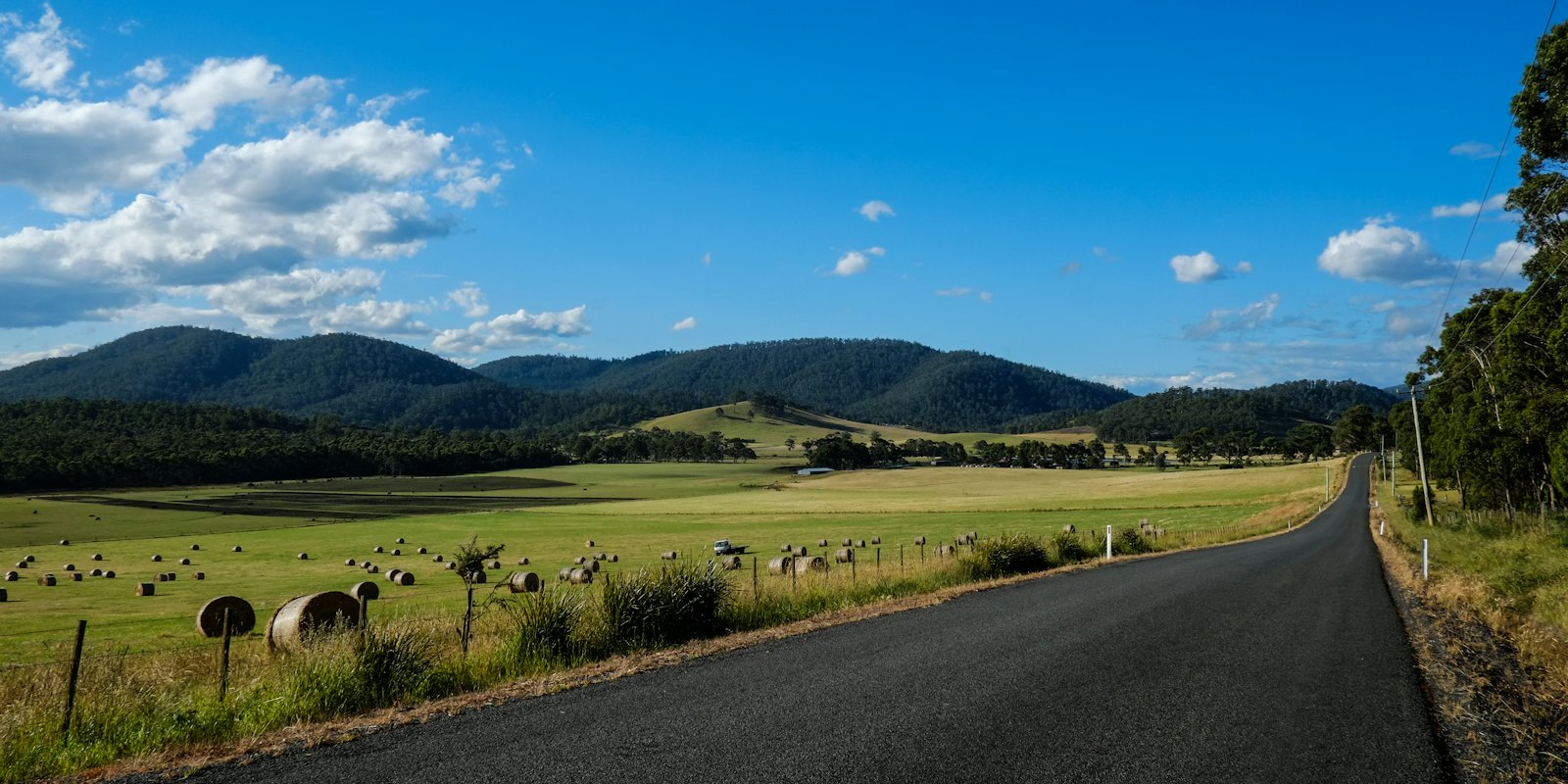
Tasmania is an island state about the size of the Republic of Ireland, according to Discover Tasmania. Distances look short on a map, but the roads are narrow, winding and often steep, so a day of driving covers less ground than you expect. In return you get a coast of granite and white sand in the east, rainforest and mining towns in the west, and national park campgrounds where you can park the van a short walk from the beach.
A campervan suits travellers who like to move every day or two and cook their own meals. It suits people who don’t mind cold mornings, because even summer nights are cool here. It is a harder sell if you want to drive long days, or if you plan a winter trip through the highlands and have no experience with ice.
At a glance
| Best time to go | December to April (summer is busiest; autumn is quieter) |
| Trip length | About 2 weeks for a full loop |
| Driving side | Left |
| Main route (distance) | “Lap of the map” loop: 1,220 km (758 mi), or 1,909 km (1,186 mi) with detours |
| Overnight rules | Designated campgrounds only; council free-camp sites have their own permits and limits |
| Currency | Australian dollar (AUD) |
| Emergency number | 000 (112 from a mobile outside your provider’s coverage) |
| Key official site | parks.tas.gov.au |
Why go by campervan
The main reason is the campgrounds. The Parks and Wildlife Service (PWS) runs sites inside or next to many of the places people come to see: Freycinet, the Bay of Fires, the Tasman Peninsula, Mount Field and the far south. Several are free, and others cost little. Discover Tasmania counts more than 50 caravan and holiday parks around the state for nights when you want power, showers and a laundry.
A van also makes the ferry worth it. The Spirit of Tasmania carries cars, motorhomes and caravans between Geelong in Victoria and Devonport on Tasmania’s north-west coast. If you are already travelling mainland Australia in a van, you can drive straight on. If you hire one on the mainland, Discover Tasmania advises checking first that the hire company allows its vehicles on the ship.
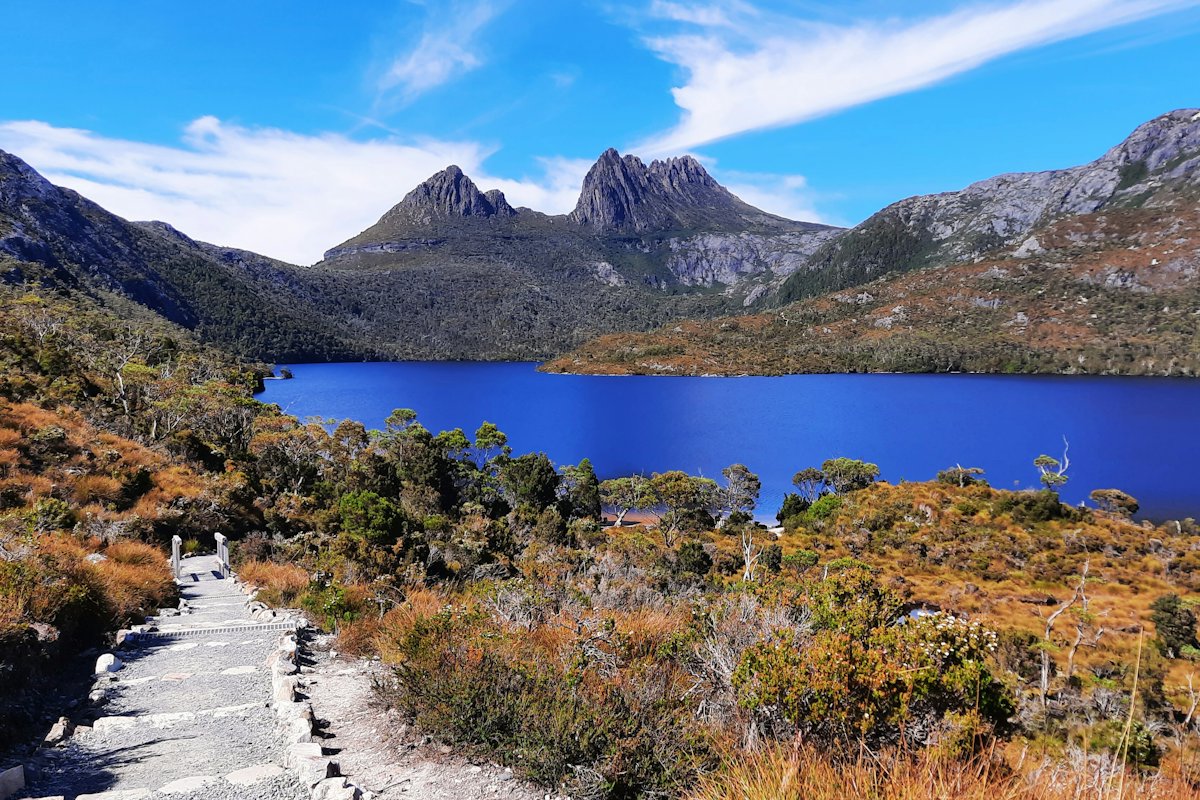
There are real downsides. Discover Tasmania warns that roads “may be narrow, winding, unsealed and steep in some regions”, and some roads near major sights are closed to campervans entirely. At Cradle Mountain, campervans, motorhomes and caravans are not permitted on Dove Lake Road at any time, and the road to Lake Dobson in Mount Field is not suitable for campervans. Winter brings snow and ice to the highlands, and short days add to fatigue.
Wildlife is the other factor. Native animals often wander onto the road between dusk and dawn. In a large, heavy vehicle, the safest plan is to be parked before dark.
When to go
Discover Tasmania describes summer (December to February) as sunny, warm and dry with daylight past 9pm, and also as the busiest time of year. Autumn (March to May) brings thinner crowds and, from late April, the turning fagus in the highlands. Winter (June to August) is cool, with snow in the highlands and the best chance of seeing the aurora australis. Spring (September to November) is milder and breezy, with snow lingering into September at altitude. The west is much wetter than the east: Hobart averages 569 mm (22 in) of rain a year, while the west coast averages 2,400 mm (94 in), according to Discover Tasmania’s climate page.
| Months | Weather | Daylight | Roads & access | Crowds |
|---|---|---|---|---|
| Dec–Feb (summer) | State average highs 18–25°C (64–77°F). Hobart lows 12–13°C (54–55°F) | Light past 9pm | All main routes open. Seasonal campfire bans on reserved land | Busiest. Freycinet sites by ballot |
| Mar–May (autumn) | Hobart highs 17–23°C (63–73°F), lows 7–12°C (45–54°F) | Shortening. Daylight saving ends first Sunday in April | Generally good. Highland frost later in the season | Thinning |
| Jun–Aug (winter) | State average highs 3–11°C (37–52°F). Launceston lows 2–4°C (36–39°F) | Shortest days | Highland roads can be icy or snow-covered | Quiet |
| Sep–Nov (spring) | Hobart highs 15–20°C (59–68°F), lows 7–10°C (45–50°F) | Lengthening. Daylight saving starts first Sunday in October | Snow possible at altitude into September. Campfire bans from late October | Rising. Ferry busy from September |
UV is high from September to April, per Discover Tasmania. For live forecasts and warnings, use the Bureau of Meteorology.
The aurora australis
Discover Tasmania’s southern lights guide says the aurora can be seen year-round, with winter’s long nights giving the best odds. You need a clear, dark view to the south. Spots it names include Cockle Creek, Bruny Island, South Arm Peninsula and Teralina / Eaglehawk Neck. The Bureau of Meteorology’s Space Weather Services issues aurora outlooks (3 to 7 days ahead), watches (up to 48 hours) and alerts, and you can subscribe to them by email.
Routes to know
Getting there: the Spirit of Tasmania
Discover Tasmania says the Geelong to Devonport crossing takes 9 to 11 hours. Ships sail both ways each night and arrive the next morning, and from September to April extra day sailings run as well. Night sailings require a booked cabin or recliner. Sailings are “very popular, especially between September and April”, so book your vehicle space well ahead. New ships are entering service in late 2026, so confirm the current timetable, terminal address and vehicle dimension rules on spiritoftasmania.com.au when you book.
Tasmania has strict biosecurity. Biosecurity Tasmania lists fresh fruit and vegetables, seafood, some animal products, plant material, soil and seeds as restricted. Vehicles and caravans must be cleaned of visible soil and mud before boarding, and staff at Geelong will ask biosecurity questions at check-in. Empty the van fridge of fresh produce before you reach the terminal.
The lap of the map (about 2 weeks)
Discover Tasmania’s lap of the map is 1,220 km (758 mi) for the main loop and 1,909 km (1,186 mi) with detours. It runs Devonport to Strahan, Strahan to Hobart, Hobart to St Helens, then back to Devonport. The page says the bare loop could be driven in three or four days but advises against it for safety, and recommends two weeks. The routes below are sections of it.
Great Eastern Drive and Freycinet (4–7 days)
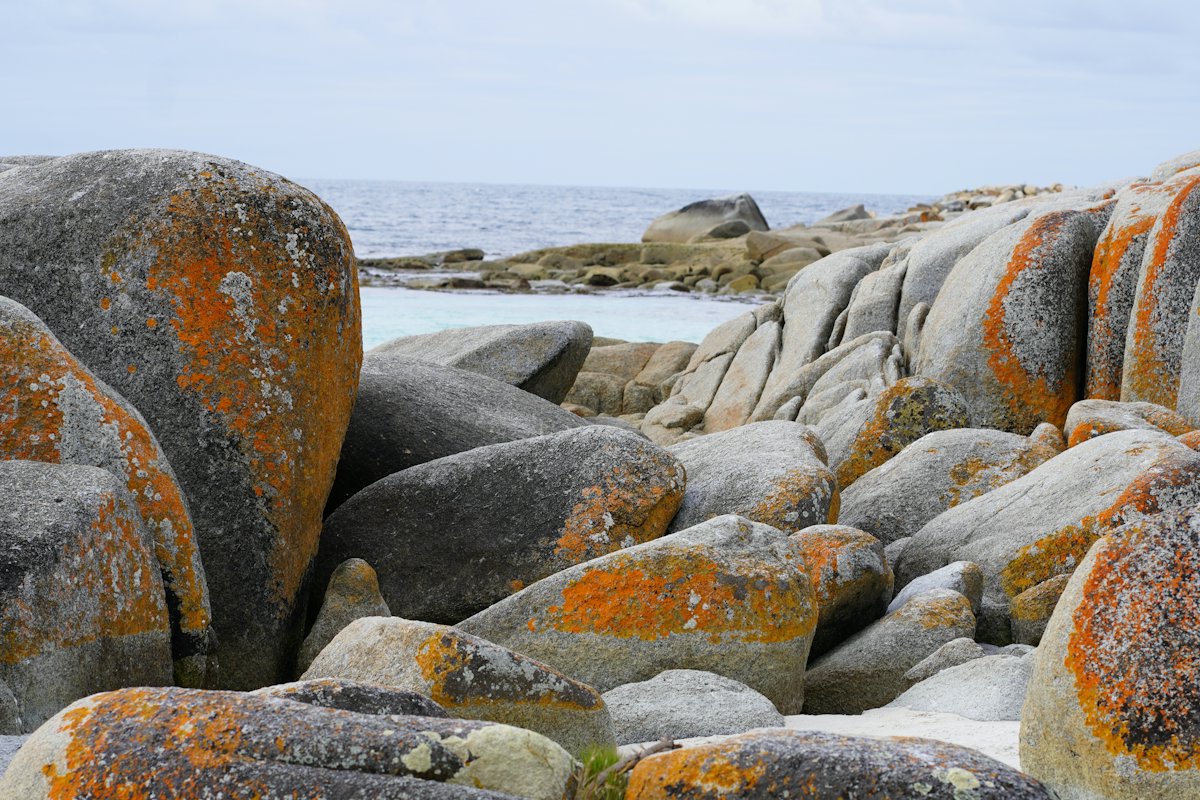
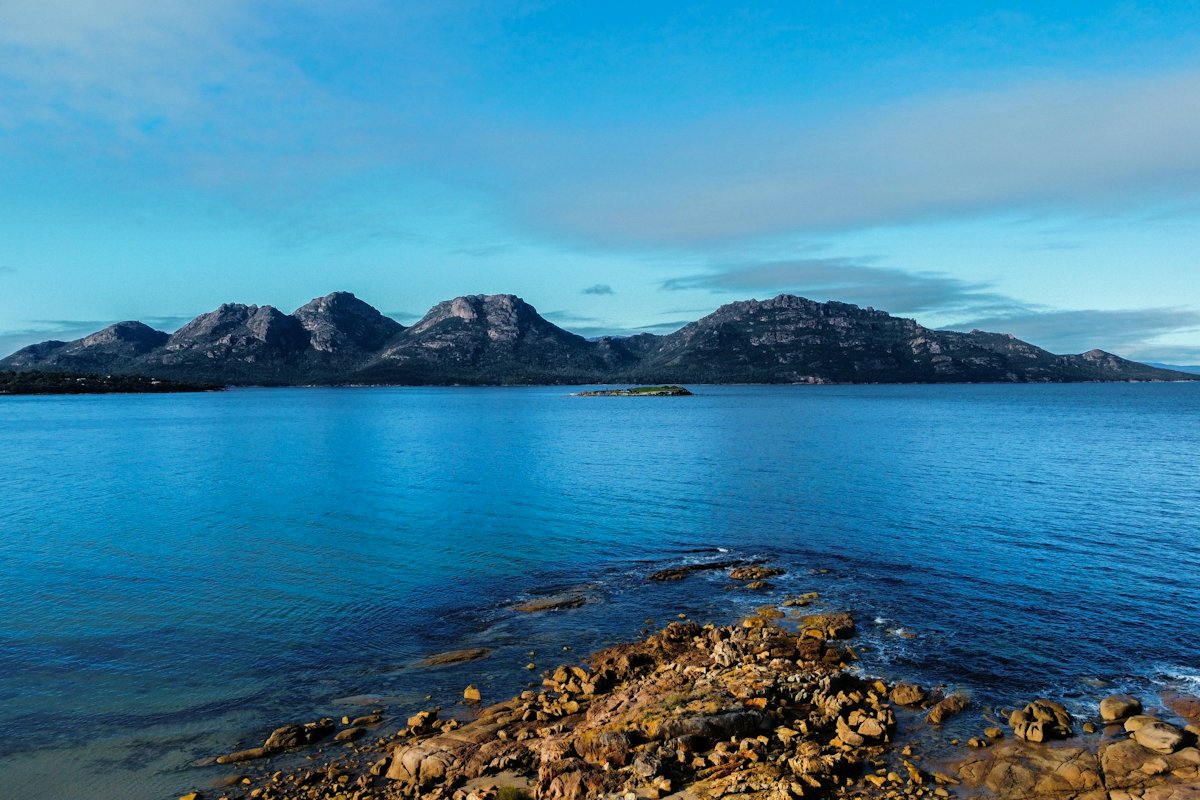
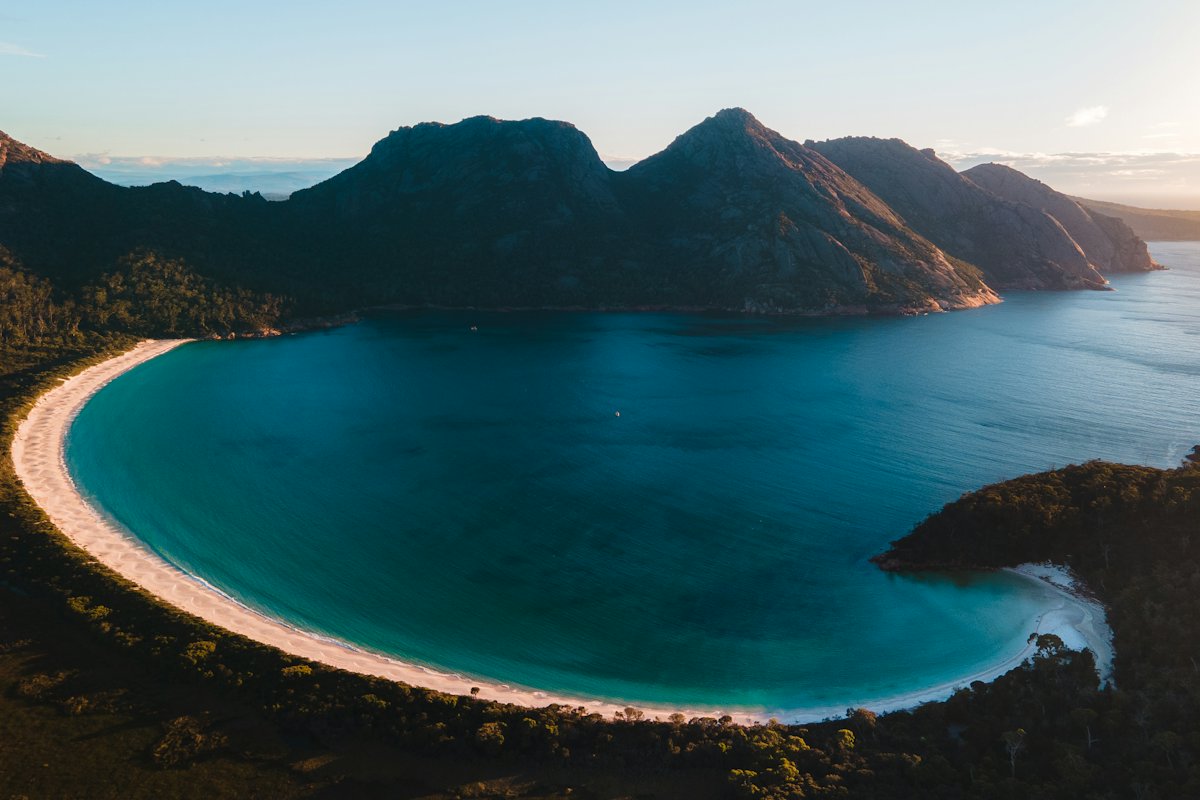
The Great Eastern Drive runs 220 km (137 mi) from Orford in the south to St Helens in the north, according to the regional tourism body East Coast Tasmania. Most legs are under an hour: Swansea to Coles Bay is 58 km (36 mi), and Coles Bay to Bicheno is 38 km (24 mi). Highlights include Maria Island, Freycinet National Park and Wineglass Bay, the little penguins at Bicheno, and the white sand and orange boulders of the Bay of Fires. Binalong Bay is 11 km (7 mi) from St Helens. Freycinet’s summer and Easter campsites go by ballot, so plan the rest of the coast around whatever you get there.
Cradle Mountain and the Western Wilds (4–5 days)
Cradle Mountain is 79 km (49 mi) from Devonport via Sheffield, about 1 hour 20 minutes, per Discover Tasmania’s drive times table. Park at the visitor centre and take the shuttle to Dove Lake, which takes about 20 minutes one way. From October to November the shuttle runs roughly 8:15am to 5:30pm, with longer hours in midsummer. From Cradle, Discover Tasmania’s west coast itinerary covers 480 km (298 mi) over four days through Lake St Clair, Queenstown and Strahan, with the West Coast Wilderness Railway and a Gordon River cruise into Macquarie Harbour. The road into Queenstown includes the “99 Bends”, and the page on the Western Wilds advises taking it slowly. Hobart to Strahan is 300 km (186 mi), about 4 hours 30 minutes.
Hobart, the Tasman Peninsula and the Huon Valley (4–6 days)
Port Arthur is 92 km (57 mi) from Hobart, about 1 hour 30 minutes. Discover Tasmania’s Tasman Peninsula itinerary covers 143 km (89 mi) over three days: the Tessellated Pavement, Tasmans Arch and the Blowhole near Eaglehawk Neck, the Port Arthur Historic Site, Remarkable Cave and Fortescue Bay. South of Hobart, the Far South itinerary is 155 km (96 mi) over three days through Huonville, Franklin, Dover and Hastings Caves to Cockle Creek, the southernmost point you can drive to in Australia. The last section of road after Ida Bay is gravel.
Where you can sleep
National park and reserve campgrounds
PWS campgrounds range from free bush sites to powered sites with hot showers. A valid parks pass is required to enter national parks, and camping fees are paid on top of it. Firewood collection is not allowed in parks and reserves, and some areas are permanently fuel-stove only.
Fees and bookings change on 3 November 2026. Several PWS campground pages list new flat per-site fees from that date, and PWS has paused new bookings for stays from 3 November while it launches a new Parks Online Booking System. Check the individual campground page before you go. Examples:
- Freycinet (Richardsons Beach, Ranger Creek): From 3 November 2026, $35 for a powered RV site and $24 for an unpowered site, up to six people. Maximum stay is 14 days, or 10 nights from 18 December to 10 February. There is no black water dump point at the campground. The PWS page says the nearest are at Bicheno and Swansea.
- Bay of Fires Conservation Area: Free, no bookings, camping only in designated campgrounds, maximum stay four weeks. Dogs on leads are allowed except at Jeanneret Beach. The black water dump station is at the corner of Tully and Young streets in St Helens.
- Fortescue Bay (Tasman National Park): $24 per site from 3 November 2026. Bookings required from 1 October to 30 April. Mill Creek has larger sites for campervans and motorhomes. Access is a 12 km (7.5 mi) unsealed road from Eaglehawk Neck, suitable for 2WD.
- Mount Field: From 3 November 2026, $24 unpowered and $35 powered. Sites are currently first come, first served, with a booking system due in late 2026.
- Cockle Creek (Southwest National Park): Free camping, parks pass required. Beyond the “NO TENTS” sign, the limited sites are for self-contained RVs only. Dogs, fires, chainsaws and generators are not permitted over the bridge.
Council free-camping sites
Some councils run low-cost or free sites, each with its own rules. Central Coast Council (Ulverstone and Penguin area) is rolling out a permit system at Forth Recreation Ground, Midway Beach – Sulphur Creek and Bannons Park – Gunns Plains. Where permit signs are up, it costs $15 per night per site. The sites are for self-contained vehicles only (no tents, no fires), with a maximum of three consecutive nights. Rules differ between councils, so read the signs and the council website for each site.
What is not allowed
Camping in PWS conservation areas such as the Bay of Fires is limited to designated campgrounds. Don’t assume a lay-by or beach car park is a legal overnight spot. During seasonal campfire bans, which start on reserved land from 2am on 26 October 2026 across 20 municipalities, campfires are banned. On Total Fire Ban days all outdoor fires are prohibited. Electric barbecues and LPG stoves are exempt, but liquid fuel stoves are not.
Caravan parks
Caravan and holiday parks fill the gaps between national park sites. They also provide dump points, laundries and power. Prices vary widely by town and season, so check each park directly.
Driving rules and road conditions
Drive on the left. The Road Safety Advisory Council’s visiting drivers pages give default speed limits of 50 km/h (31 mph) in urban areas, 100 km/h (62 mph) on rural roads and 80 km/h (50 mph) on gravel roads, unless signposted otherwise. Drive slower than the limit in poor conditions. Everyone in the vehicle must wear a seatbelt.
Plan short days. RSAC suggests no more than 300 km (186 mi) of driving per day and notes that 150 km (93 mi) can take two hours. Take regular breaks and stop when tired.
Licences. The Tasmanian Department of State Growth says visitors can drive on a current overseas licence, which they must carry. If the licence is not in English, carry an international driving permit or an accredited English translation as well. You may only drive vehicle types your licence covers.
Wildlife. RSAC and Discover Tasmania both warn about animals on the road, especially at dawn and dusk. Slow down at those times, or better, avoid driving them.
Gravel roads. Watch for loose gravel, rocks and soft corners. Discover Tasmania notes that some rental contracts have special conditions for unsealed roads, so read yours.
Winter. Highland roads can be icy or snow-covered. The Lake Dobson road in Mount Field may need chains and can close.
Fuel. Discover Tasmania warns that some fuel stations close as early as 5pm, particularly in remote regions. Keep the tank well above empty before long drives. FuelCheck TAS lists prices and station locations.
Live conditions. TasALERT, run by the Tasmanian Department of Premier and Cabinet, maps current emergency alerts. Check it and the Bureau of Meteorology forecast each morning, especially before crossing the west or the Central Plateau.
What it costs
| Item | Cost (AUD) | Source and date |
|---|---|---|
| Parks Holiday Pass, per vehicle (up to 8 people, up to 2 months) | $98.35 | PWS, 2026 price |
| Parks Daily Pass, per vehicle (excludes Cradle Mountain) | $49.15 | PWS, 2026 price |
| Cradle Mountain Daily Pass, adult (includes shuttle) | $30.70 | PWS, 2026 price |
| Cradle Mountain shuttle, adult, 72 hours (if not on a Cradle pass) | $15.50 | PWS, 2026 price |
| Freycinet powered RV site (from 3 Nov 2026) | $35 per site | PWS, October 2026 |
| Mount Field or Fortescue Bay unpowered site (from 3 Nov 2026) | $24 per site | PWS, October 2026 |
| Bay of Fires and Cockle Creek campgrounds | Free | PWS, October 2026 |
| Central Coast Council self-contained site | $15 per night | Central Coast Council, October 2026 |
| Spirit of Tasmania vehicle and passenger fare | Varies by date | Check spiritoftasmania.com.au |
| Fuel | Varies by town | Check FuelCheck TAS |
The Holiday Pass does not include the Cradle Mountain shuttle, and PWS reviews park fees annually. A two-week loop that mixes free PWS sites with paid national park sites and the odd caravan park keeps nightly costs low. The big fixed costs are the ferry and fuel. Price the ferry for your exact dates and vehicle size first, since it varies most, then add the Holiday Pass and a nightly average for campgrounds. Prices change, so treat every figure here as a starting point.
Tips
- Book the ferry first. Vehicle space on the Spirit of Tasmania is in demand from September to April, and the rest of your route depends on your arrival date.
- Eat the fresh food before Geelong. Biosecurity rules restrict fresh fruit and vegetables, and staff ask about them at check-in. Shop in Devonport instead.
- Wash the van. Vehicles must be free of visible soil and mud before boarding, and that includes bikes and camping gear.
- Buy the Holiday Pass online. One vehicle pass covers all national parks for up to two months. Buy it at passes.parks.tas.gov.au before you arrive.
- Park before dusk. Wildlife on the roads at dawn and dusk is the most common warning in official Tasmanian driving advice.
- Keep 300 km as a ceiling. RSAC’s suggested daily limit is a good rule for a heavy vehicle on winding two-lane roads.
- Fill up in the afternoon. Rural fuel stations can close by 5pm, so don’t plan to refuel on the way to camp after dark.
- Carry a gas stove. Seasonal campfire bans run from late October, and many areas are fuel-stove only all year.
- Know where the dump points are. Freycinet’s campground has none, and the Bay of Fires dump station is in St Helens. Never empty a chemical toilet into campground toilets.
- Check campground pages after 3 November 2026. New fees and a new PWS booking system are due from that date, so details here may change.
Frequently asked questions
Can I take a campervan on the Spirit of Tasmania?
Yes. The Spirit of Tasmania carries cars, motorhomes and caravans between Geelong and Devonport, and the crossing takes about 9 to 11 hours. If the van is hired, check first that the hire company allows it on the ship. Book early for September to April, and confirm vehicle size rules when you book.
Do I need a national parks pass in Tasmania?
Yes, a valid parks pass is needed to enter Tasmania’s national parks. For a road trip, the Holiday Pass covers one vehicle and up to eight people in all national parks for up to two months, at $98.35 (2026 price). It does not include the Cradle Mountain shuttle bus. Camping fees are paid separately.
Is free camping allowed in Tasmania?
Free camping is allowed at specific sites, not anywhere you like. The Bay of Fires Conservation Area and Cockle Creek have free PWS campgrounds, and camping is limited to designated sites. Some councils run low-cost sites for self-contained vehicles, such as Central Coast Council’s $15 permit sites with a three-night limit. Always follow the signs and the land manager’s rules for each site.
Can I drive my campervan to Dove Lake at Cradle Mountain?
No. Campervans, motorhomes, caravans and trailers are not permitted on Dove Lake Road at any time. Park at the Cradle Mountain Visitor Centre and take the shuttle bus, which takes about 20 minutes each way. The shuttle is included in the Cradle Mountain Daily Pass, or costs $15.50 per adult for 72 hours (2026 price).
When can I see the aurora australis in Tasmania?
Discover Tasmania says the aurora can appear year-round, with winter’s long, dark nights giving the best chance. You need clear skies and an unobstructed view to the south, away from town lights. The Bureau of Meteorology’s Space Weather Services issues aurora outlooks, watches and alerts you can subscribe to. Sightings are never guaranteed.