Portugal by campervan: the complete guide
Plan a Portugal campervan trip: the 48-hour overnight rule, protected-area bans, electronic tolls for foreign plates, routes and the best months to go.
- Best Apr–Jun & Sep–Oct
- 48 h overnight limit
- Drive on the right
- 112 for emergencies

João & Maria · Updated · 13 min read
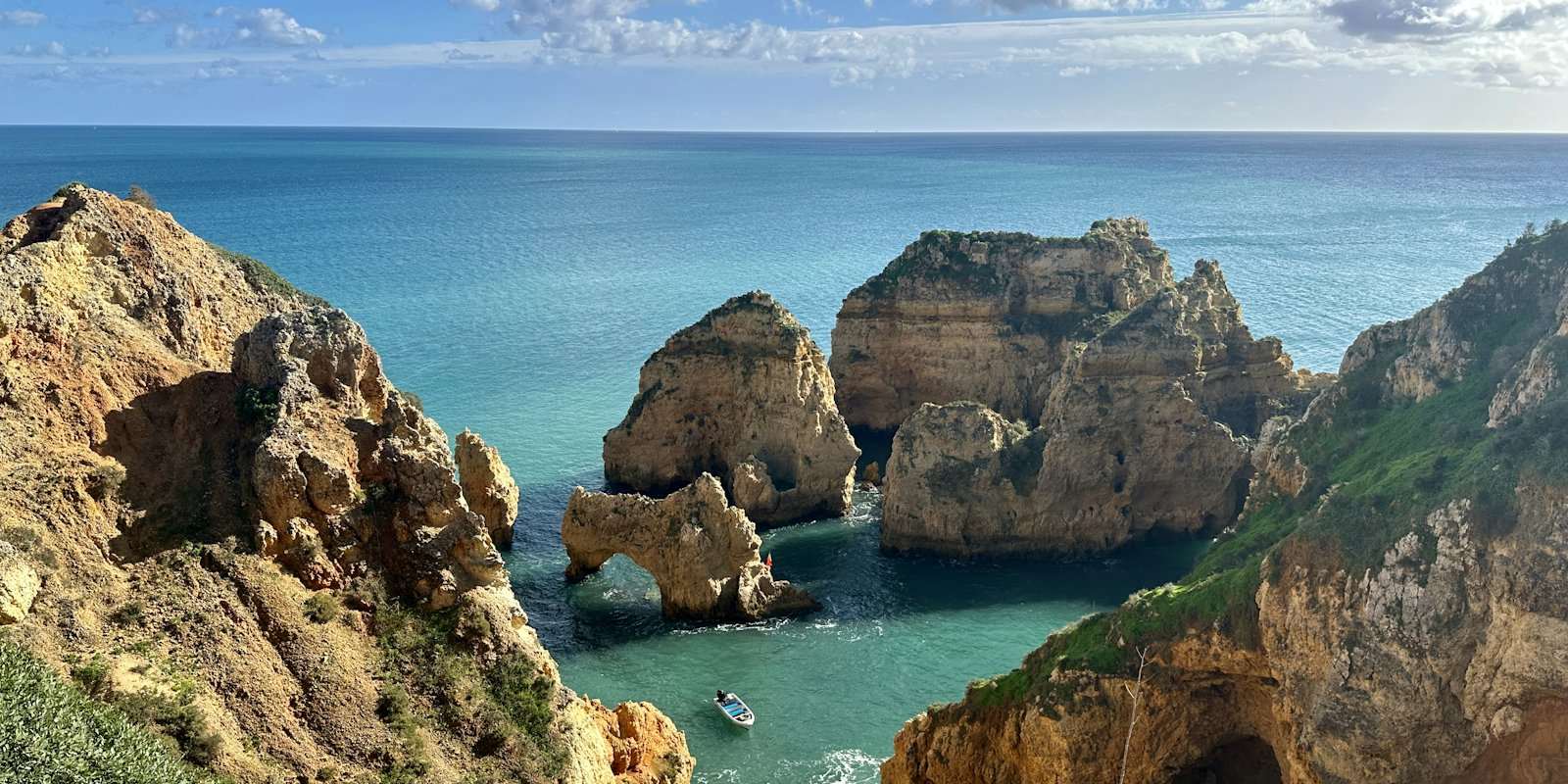
Portugal is a small country with a long coast, and that makes it a natural fit for a campervan. You can wake up near the Atlantic cliffs of the southwest, drive inland to the terraced vineyards of the Douro, and reach the highest road in the mainland within a couple of days. Winters on the south coast are mild, and the road network ranges from fast motorways to slow, curling national roads.
There are two things to understand before you go. Since 2021, the law spells out exactly where a motorhome may spend the night, and the rules are strict in protected areas, which cover much of the best coastline. And several motorways have no toll booths at all, so a foreign-plated van needs a payment method sorted before the first gantry. This guide covers both, plus routes, seasons and costs, using official sources wherever we could open them.
At a glance
| Topic | What to know |
|---|---|
| Best time | April–June and September–October for mild heat and less rain |
| Trip length | We’d plan 10–14 days for the coast plus one inland region |
| Driving side | Right; overtake on the left (RAC, secondary) |
| Main route distance | EN2 runs about 739 km (459 mi) from Chaves to Faro |
| Overnight rules | Up to 48 hours per municipality outside protected areas, unless local rules say otherwise |
| Currency | Euro (€) (European Union) |
| Emergency number | 112 |
| Key official site | Portugal Tolls portal for paying electronic tolls |
Why go by campervan
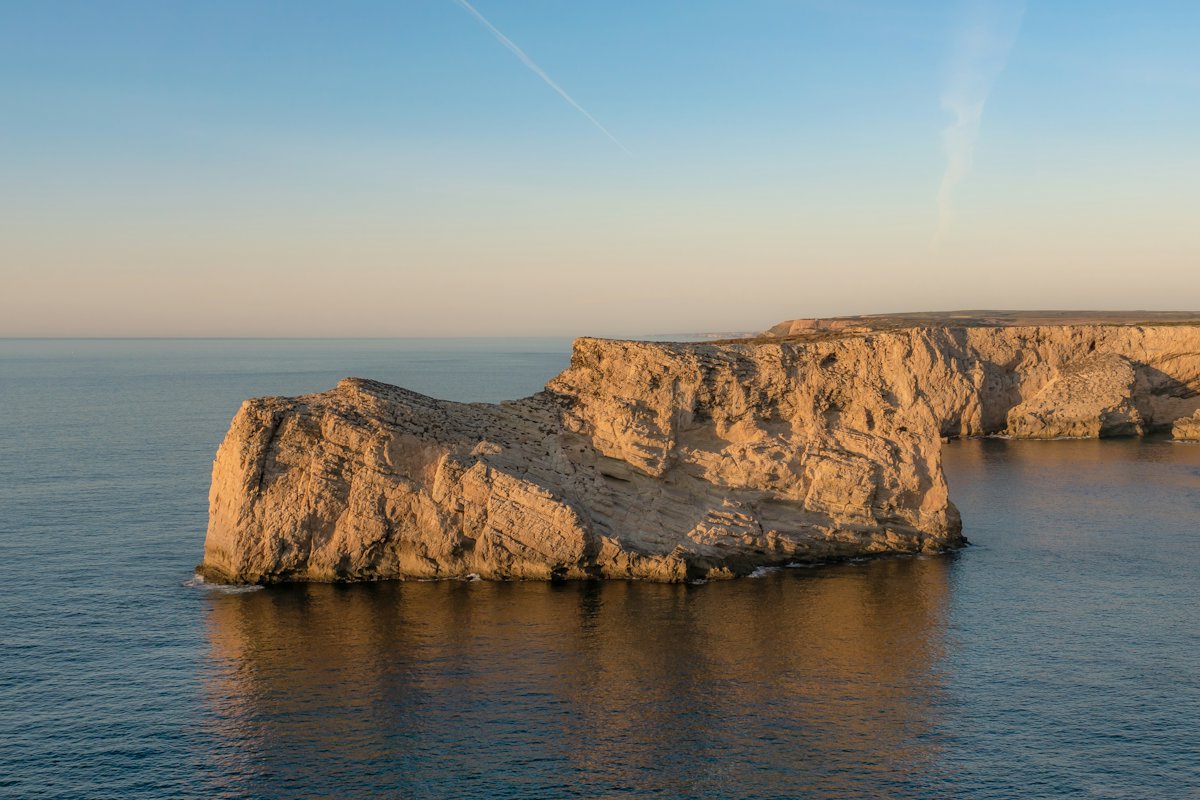
Portugal’s main draws are spread out and often far from big towns. The southwest coast is a protected natural park. The Douro wine country sits a good drive east of Porto. Serra da Estrela is in the center of the country, on the border of the Seia and Covilhã municipalities. A van lets you link these without packing and unpacking every night.
The infrastructure is also built for it. Turismo de Portugal runs a national network of motorhome service areas (áreas de serviço para autocaravanas, or ASA) that operate 24 hours a day, with parking, overnight stays, electricity, water and waste disposal.
When to go
The numbers below come from IPMA, Portugal’s weather and climate institute, using its 1991–2020 climate normals for Lisbon (Tapada) and Faro. “Average high” is the mean daily maximum.
| Season | Lisbon average high | Faro average high | What it means for a van trip |
|---|---|---|---|
| Winter (Jan) | 15.3°C (59.5°F) | 16.3°C (61.3°F) | Mild on the coast. Lisbon averages 89.7 mm of rain in January. Snow can close the roads up Serra da Estrela. |
| Spring (Apr–May) | 20.2–22.9°C (68.4–73.2°F) | 20.7–23.5°C (69.3–74.3°F) | Comfortable driving weather. Rain tapers off through May. |
| Summer (Jul–Aug) | 28.4–29.0°C (83.1–84.2°F) | 29.4°C (84.9°F) in July | Faro averages 13.1 days at or above 30°C (86°F) in July. Busiest months on the coast. |
| Autumn (Sep–Oct) | 26.7–23.0°C (80.1–73.4°F) | 26.4–23.3°C (79.5–73.9°F) | Warm sea and fewer crowds. Rain returns in October (93.5 mm in Lisbon). |
November is Lisbon’s wettest month in the normals, at 107.3 mm. July and August are almost dry, with 2.4 mm and 4.0 mm. IPMA’s climate classification puts the interior Douro Valley and most of the south in the warm, dry-summer category, while the western coasts of the Alentejo and Algarve have milder summers.
Fire season matters too. The UK government’s travel advice for Portugal says wildfire risk is higher from April to October, when it is hot and dry, and that starting a fire, even by accident, is illegal. Factor that into any plan to cook outside.
Routes to know
These five routes cover the main landscapes. Distances are given where we found a source. For the others, check a route planner before you go.
Algarve coast
The A22, or Via do Infante, runs along the Algarve from Vila Real de Santo António on the Spanish border to Lagos. Under Lei 37/2024, tolls on the A22 ended on 1 January 2025, according to regional newspaper Postal do Algarve (secondary). The same law removed tolls on the A4, A13, A13-1, A23, A24, A25 and two sections of the A28. The gantries may still be there, so don’t be surprised to see them. The western end of the Algarve, around Cabo de São Vicente, falls inside the protected natural park, which affects where you can sleep.
Southwest Alentejo and Vicentine Coast
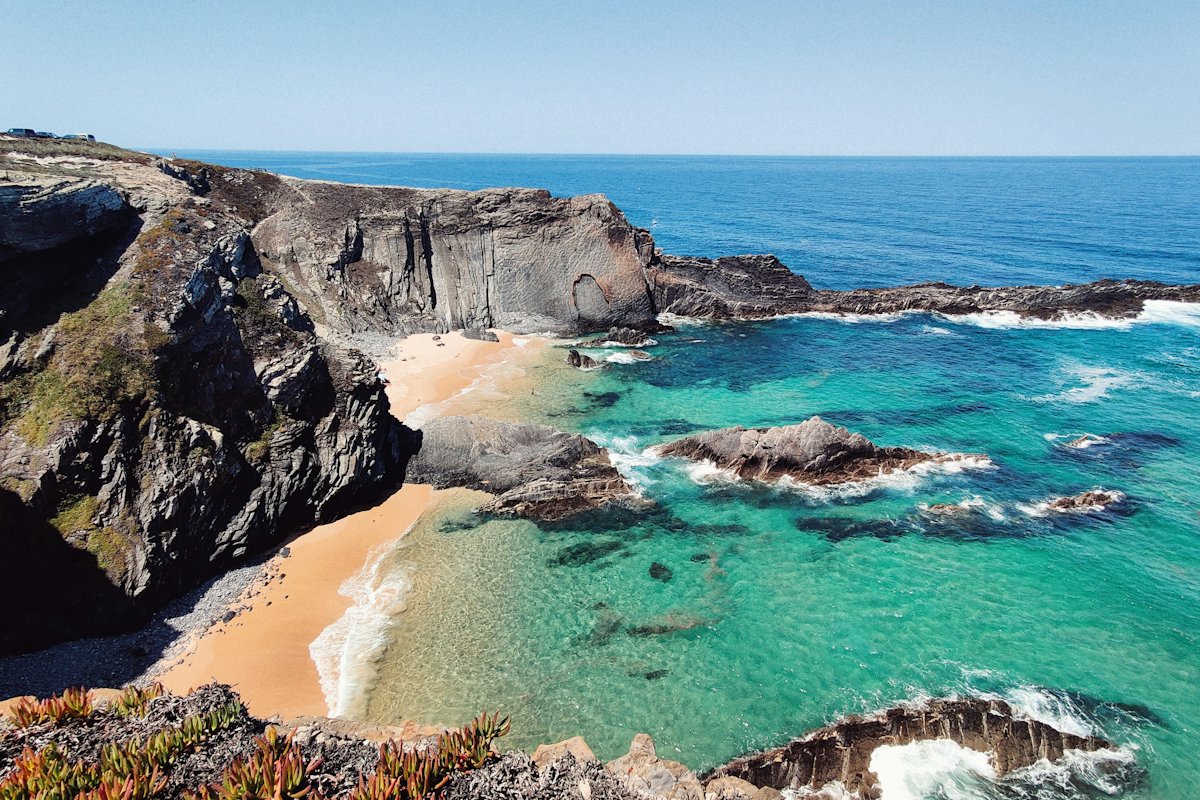
The Natural Park of Southwest Alentejo and Vicentine Coast runs from São Torpes, south of Sines, to Burgau in the Algarve. It covers parts of Sines, Odemira, Aljezur and Vila do Bispo, as reported by Postal do Algarve (secondary) from an ICNF operation. The Rota Vicentina walking and cycling network runs through this area, including the Historical Way and the Fishermen’s Trail. A van makes a good base for day walks here, but the whole park counts as a protected area under the overnight rules below. Plan to sleep in campsites or authorized service areas.
Douro Valley on the N222
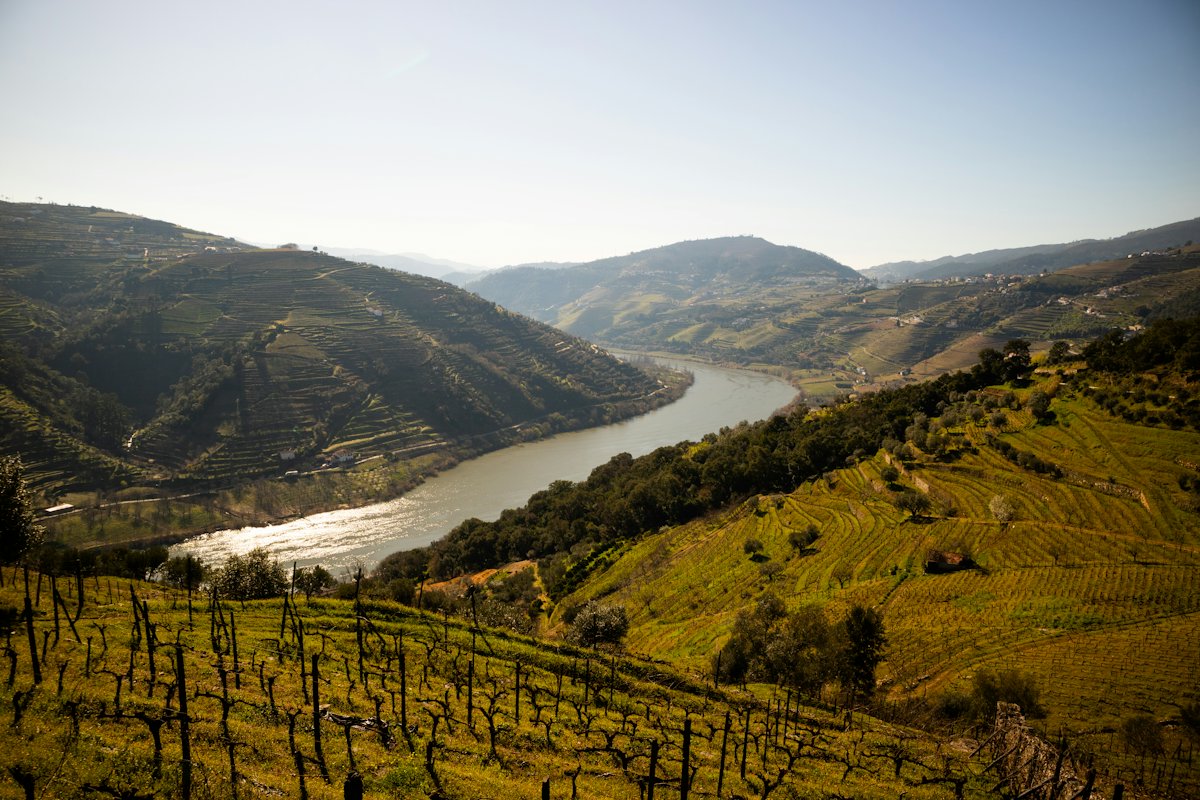
The N222 between Peso da Régua and Pinhão is a 27 km (17 mi) stretch along the south bank of the Douro, according to Postal do Algarve (secondary). The full N222 is much longer, at 226.3 km (140.6 mi), from Vila Nova de Gaia to Almendra. The Régua–Pinhão section is known for its curves, with terraced vineyards on both sides. IPMA lists the interior Douro as warm and dry in summer, so spring and early autumn are the more comfortable months.
Serra da Estrela
Torre, on the Serra da Estrela plateau, is the highest point in mainland Portugal at 1,993 m (6,539 ft), and it can be reached by paved road (Wikipedia, secondary). Covilhã is about 20 km (12 mi) away. Snow can fall from October to April. Closures are common. In April 2025, civil protection closed the road sections between Piornos, Torre and Portela do Arão after snowfall, with no reopening date at first, as reported by Diário de Notícias (secondary). A long or heavy motorhome on snowy mountain roads is a real risk, so check road status the same morning.
EN2, Chaves to Faro
The EN2 crosses the country from north to south. It runs about 739 km (459 mi) from the km 0 marker in Chaves, near the Spanish border, to Faro, passing through 11 districts and 35 municipalities, according to Postal do Algarve (secondary). It is slow by design. We’d allow at least a week if you want time to stop.
Where you can sleep
Portugal changed its overnight rules for motorhomes in 2021. Lei 66/2021 amended articles 48 and 50-A of the Código da Estrada (Highway Code) and took effect the day after publication in August 2021. The consolidated text published by the Lisbon Prosecutor-General’s office sets out the rules below.
Key definitions
- Pernoita (overnight stay): a motorhome or similar vehicle staying put with people inside between 10 p.m. and 7 a.m.
- Aparcamento: parking that takes up more space than the vehicle’s own footprint. Think awnings, chairs, tables or leveling gear spread out around the van.
- Autocaravana ou similar: any vehicle with a living space, or one adapted for it. That includes many campervans.
The rules
- In Rede Natura 2000 areas, protected areas and zones covered by Coastal Zone Plans (POOC), overnight stays and aparcamento are banned except in places expressly authorized for it. Parking motorhomes is also banned in these areas.
- Everywhere else, unless the municipality has its own rules, an IMT-approved motorhome may stay overnight for up to 48 hours in the same municipality. In expressly authorized places, there is no limit.
- Fines are €60 to €300 for breaking the general rule and €120 to €600 for overnight stays in the protected zones.
The protected zones cover much of the coast. Enforcement is real. In one 2020 operation in the Southwest Alentejo park, ICNF, the GNR and the Maritime Authority covered 24 beaches and issued 92 notices for illegal camping, wild motorhome parking and parking in banned places (secondary press report).
For how Portugal compares with its neighbors, see our guide to wild camping rules in Europe.
Motorhome service areas (ASA)
ASAs are the simplest legal option. Turismo de Portugal describes a national network of service areas open 24 hours, offering parking and overnight stays, electricity, water and waste disposal. Locations and services are listed on the Outdoor Routes Portugal platform, run with the Portuguese Camping and Mountaineering Federation, which also handles online reservations. In 2021, the government signed a protocol to bring the Algarve’s service areas into the same platform. Turismo de Portugal also says enforcement is being stepped up through agreements with the GNR, PSP, Maritime Authority and ICNF.
Campsites
Campsites (parques de campismo e de caravanismo) are the other main option, and the obvious choice inside protected areas. In July and August, we’d book ahead on the coast.
Protected areas
Inside the Natural Park of Southwest Alentejo and Vicentine Coast, and anywhere in Rede Natura 2000 or under a coastal plan, only sleep in places expressly authorized for motorhomes. If there is no sign or listing saying a spot is authorized, assume it isn’t.
Driving rules and road conditions
Speed limits
The EU’s Your Europe road rules page for Portugal gives these limits for passenger cars and vans under 3.5 tonnes, unless signs say otherwise:
| Road type | Limit |
|---|---|
| Urban areas | 50 km/h (31 mph) |
| Outside urban areas | 90 km/h (56 mph) |
| Expressways | 100 km/h (62 mph) |
| Motorways | 120 km/h (75 mph) |
For heavy goods vehicles over 3.5 tonnes, the same page lists 80 km/h (50 mph) outside towns and 90 km/h (56 mph) on motorways. It does not list motorhomes separately, so if yours is over 3.5 tonnes, check how it is classified before you drive. The Código da Estrada also sets a minimum speed of 50 km/h (31 mph) on motorways, with a €60 to €300 fine.
Other rules from the same EU page: the blood alcohol limit is 0.5 g/l for standard drivers and 0.2 g/l for new and professional drivers. Seat belts are mandatory. Phones are allowed only hands-free. Cars must carry a reflective vest and a warning triangle.
The RAC (secondary) adds that motorhomes and car-plus-caravan combinations must not exceed 18.75 m in length, 4 m in height or 2.55 m in width, and that motorways and some main roads have SOS phones every 2 km.
Tolls and electronic-only motorways
Portugal has two types of toll motorway. Some have traditional toll plazas, where you can pay in a manned or automatic lane. Others are electronic-only, with gantries and no booths at all. The official toll portal says these roads are marked with a specific sign and links to a map.
Toll class depends on axles and the height of the vehicle at the front axle, not on vehicle type. Class 1 is two axles and under 1.10 m at the front axle. Class 2 is two axles and over 1.10 m, which covers many campervans and motorhomes (maut1, secondary).
For foreign-registered vehicles, the toll portal lists these options, as of October 2026:
| Option | Device? | Cost | Notes |
|---|---|---|---|
| Easytoll | No | €1 subscription + €0.32 per trip | Links a Mastercard, Visa or Maestro card to your plate. Valid 30 days. Not valid on the Lusoponte bridges in Lisbon. |
| Tollcard | No | €1 subscription + €0.32 per trip | Prepaid card in €5, €10, €20 or €40 values, activated by text message. Valid one year. Not valid on the Lusoponte bridges. |
| Via Verde Go Toll | No | €0.77 per month used + €0.32 per trip | For non-Portuguese plates. Motorways only. |
| Via Verde Go Toll & Beyond | Yes | €1.99 per month used | Covers all motorways, including electronic lanes at toll plazas, plus parking. Optional €1.99 roaming add-on for Spain and France. |
| Foreign device (interoperability) | Yes | Set by your provider | Confirm with your issuer that Portugal is active before you travel. |
Via Verde’s visitor page confirms the two Go Toll plans and says there is no minimum term. You pay only in the months you use them.
At traditional toll plazas, lanes marked Via Verde are for vehicles with an active device. The toll portal also describes post-payment for electronic-only roads: charges become payable within 48 hours of passing a gantry, you then have 15 working days, and you can pay at CTT post offices, Payshop agents or Multibanco ATMs. The admin fee is €0.32 per journey, capped at €2.56 per payment. If you think you may have missed a toll, GOV.UK points travelers to the toll payment portal.
What it costs
We found official figures for tolls only, and prices change, so recheck before you go. For campsite and service area prices, check each site directly, since they vary by place and season.
- Toll admin fees: €0.32 per trip on Easytoll, Tollcard and Go Toll, on top of the toll itself (October 2026).
- Monthly plans: €0.77 per month for Go Toll, €1.99 per month for Go Toll & Beyond, charged only in months you use them (October 2026).
- Toll-free motorways: since 1 January 2025, the A22 in the Algarve and the other former SCUT roads listed above carry no tolls (secondary source).
- Fuel: Portugal’s energy authority, DGEG, publishes station-by-station and average prices on its Preços dos Combustíveis Online tool. We couldn’t read a current national average from it, so check it while planning. DGEG’s fuel page links to the same tool.
- Fines to avoid: €60 to €300 for illegal overnight stays or parking, and €120 to €600 in protected areas.
Tips
- Set up toll payment before you cross the border. Electronic-only roads have no booths. Easytoll or a Via Verde plan saves you chasing payments later.
- Measure your front-axle height. Most campervans will be Class 2 at over 1.10 m, and that sets your toll rate.
- Pack nothing outside at roadside spots. Chairs, awnings or tables can turn legal parking into banned aparcamento.
- Learn the hours. An overnight stay legally means people in the vehicle between 10 p.m. and 7 a.m.
- Treat the southwest coast as campsite and ASA only. The whole natural park is a protected area.
- Use the Outdoor Routes Portugal platform to find and book service areas.
- Check the Serra da Estrela roads on the day. Snow can close the approach to Torre from autumn into April.
- Respect the fire season. From April to October, avoid open flames outdoors and call 112 if you see a fire.
- Drive the N222 in daylight. Narrow curves and retaining walls leave little room for a wide van.
- Bring the basics for the road. A reflective vest and warning triangle are required. Our campervan packing list covers the rest.
If you’re still choosing a vehicle, our guide to Class A, B and C motorhomes explains the size trade-offs, which matter on the narrow roads of the Douro and Serra da Estrela.
Frequently asked questions
Can you wild camp in a campervan in Portugal?
Not in the way some countries allow. Since Lei 66/2021, motorhome overnight stays are banned in Rede Natura 2000 areas, protected areas and coastal plan zones, unless a place is expressly authorized. Elsewhere, an IMT-approved motorhome may stay up to 48 hours in the same municipality, unless the municipality has its own rules. Setting up outside the vehicle, and camping on public roads, are not allowed.
How do I pay tolls in Portugal with a foreign-registered campervan?
Some motorways are electronic-only, so you need a payment method linked to your plate or a device. The official toll portal lists Easytoll and Tollcard, which need no device, and the Via Verde Go Toll and Go Toll & Beyond plans. Most campervans pay Class 2 rates if they are over 1.10 m at the front axle. Check the portal for current fees before you travel.
Are Algarve motorway tolls still charged?
According to regional press reports, tolls on the A22 Via do Infante ended on 1 January 2025 under Lei 37/2024. The same law removed tolls on several other former SCUT motorways in the interior and north. Other Portuguese motorways still charge tolls, so you still need a payment method.
What is the speed limit for a campervan in Portugal?
For vehicles under 3.5 tonnes, the EU’s road rules page lists 50 km/h in towns, 90 km/h outside towns, 100 km/h on expressways and 120 km/h on motorways. Heavier vehicles have lower limits, so check how your motorhome is classified if it is over 3.5 tonnes. There is also a 50 km/h minimum on motorways.
When is the best time for a campervan trip in Portugal?
April to June and September to October are the most comfortable months on IPMA’s climate data. Average highs in Lisbon and Faro are in the 20s°C (high 60s to 70s°F), and summer heat and winter rain are both lower. July and August are hot and busy, and wildfire risk runs from April to October. Winter is mild on the south coast, but mountain roads can close for snow.